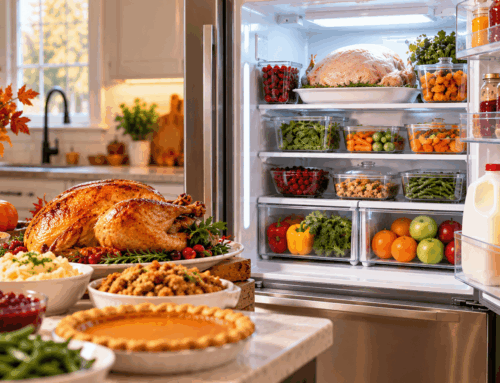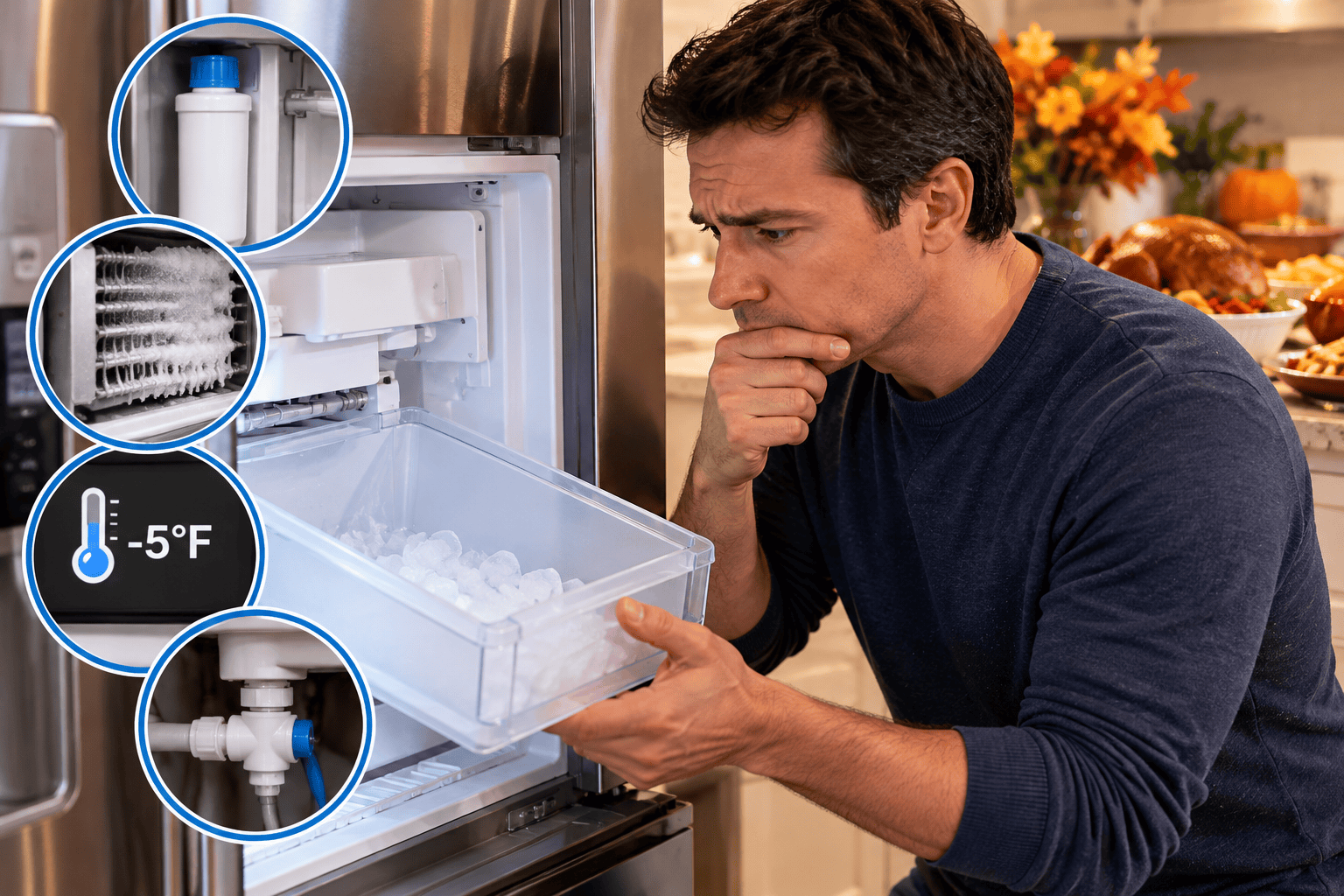
Refrigerator not cooling before Thanksgiving can disrupt your holiday plans. Check actual temperature, door seals, airflow, and food safety before loading holiday groceries.
A refrigerator that is slightly warm during an ordinary week is already inconvenient. Before Thanksgiving, it can become a much bigger problem. Families often buy more groceries than usual, prepare dishes in advance, chill beverages, thaw ingredients safely, and expect enough refrigerator space for leftovers after the meal.
If your refrigerator is not cooling before Thanksgiving, do not wait until the night before the holiday to investigate. A cooling problem can develop gradually, and a refrigerator may still sound like it is running even when the cabinet is warmer than it should be. Start testing early as part of your plan to prepare your kitchen for Thanksgiving cooking.
Why Refrigerators Struggle During Thanksgiving
Thanksgiving changes the way a refrigerator is used. More food is loaded into the cabinet, doors open more frequently, warm prepared dishes may be introduced after proper cooling, and family members may spend more time deciding what they need.
The kitchen itself may also be warmer because the oven and range are operating for hours. These conditions make the refrigerator work harder.
A properly functioning refrigerator should still maintain its intended temperature range. If it cannot recover after normal door openings or grocery loading, a maintenance or repair issue may be developing.
1. Check the Refrigerator Temperature
Start with the actual temperature rather than guessing based on how cold a container feels.
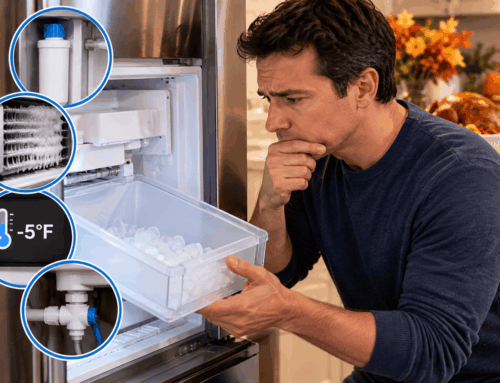
Check the refrigerator display if your model has one. A separate appliance thermometer can also help confirm the cabinet temperature. Follow food-safety guidance and the appliance manufacturer’s recommendations for proper storage temperatures.
If the cabinet is warmer than expected, avoid repeatedly changing the control to the coldest setting. A setting change cannot repair a failed fan, sensor, compressor-related component, blocked airflow path, or damaged door seal.
Give the refrigerator reasonable time to stabilize after loading groceries, then verify whether the temperature is moving in the right direction.
2. Make Sure Food Is Not Blocking Air Vents
Holiday groceries can quickly fill every shelf. That can create an airflow problem even when the cooling system is operating.
Most refrigerators rely on air movement to distribute cold air through the fresh-food and freezer compartments. Large trays, bags, containers, and beverage cases placed directly in front of vents can create warm areas.
Leave space around vents and avoid packing food tightly against the back wall unless the manufacturer specifically allows it.
Organizing the refrigerator before the Thanksgiving grocery trip can prevent this problem. Remove expired items, consolidate containers, and create dedicated areas for ingredients, prepared dishes, beverages, and leftovers.
3. Inspect the Door Gaskets
A damaged or dirty door gasket can allow warm room air to enter the refrigerator.
Look for torn sections, hardened areas, food residue, or spots where the gasket no longer sits flat against the cabinet. Clean accessible gasket surfaces gently according to the manufacturer’s instructions.
Also make sure containers, shelves, and oversized food packages are not preventing the door from closing completely.
A refrigerator door that remains slightly open for long periods can raise temperature, create condensation, and increase cooling-system run time.
4. Listen for Fans and Normal Operating Sounds
Modern refrigerators use different combinations of evaporator fans, condenser fans, compressors, dampers, and electronic controls.
You do not need to diagnose these components yourself, but changes in normal sound can provide useful clues. A fan that suddenly becomes noisy, repeated clicking, unusual buzzing, or complete silence during a period when the refrigerator should be cooling can indicate a problem.
Appliance Cowboys’ overview of common refrigerator repair problems can help you recognize symptoms worth documenting before service.
Do not remove internal panels or place hands near moving fan components.
5. Check for Excessive Frost or Ice
Heavy frost in the freezer or around interior air passages can interfere with airflow.
A small amount of frost may occur under certain conditions, but thick ice buildup can be associated with door-seal problems, defrost-system issues, frequent door openings, or other faults.
Do not chip ice away with knives or sharp tools. Puncturing an interior wall or refrigerant component can turn a repairable problem into major damage.
If frost repeatedly returns after normal cleaning or manufacturer-approved defrosting, schedule diagnosis.
6. Check Accessible Condenser Areas
Some refrigerators have condenser coils or ventilation areas that homeowners can clean. Others use enclosed designs.
Consult the owner’s manual before cleaning. If the condenser area is accessible, dust, pet hair, and debris can reduce the refrigerator’s ability to release heat.
Disconnect power when required by the manufacturer and use appropriate cleaning methods. Do not bend tubing or remove sealed covers.
Routine cleaning can support efficient operation, which is particularly useful when Thanksgiving increases the appliance’s workload.
7. The Refrigerator Runs Constantly
Longer run times can be normal after a large grocery load or frequent door openings. Constant operation combined with poor cooling is different.
A weak seal, dirty condenser area, blocked airflow, sensor problem, fan issue, or cooling-system fault can make the refrigerator run without reaching the desired temperature.
Appliance Cowboys’ article about why refrigerators struggle in summer and winter explains how surrounding conditions and appliance performance can interact.
If the refrigerator seems to run continuously for hours while the temperature keeps rising, do not assume it simply needs more time.
8. The Freezer Is Cold but the Refrigerator Is Warm
This symptom often points toward an airflow or control problem rather than a total loss of cooling.
Cold air may not be moving properly from the freezer area into the fresh-food compartment. Depending on the model, possible causes can involve a fan, damper, frost blockage, sensor, or control.
Appliance Cowboys’ refrigerator-not-cooling troubleshooting guide discusses several common cooling patterns.
Keep vents clear and avoid dismantling internal panels. If the fresh-food compartment remains warm while the freezer stays cold, professional diagnosis may be needed.
9. The Refrigerator Is Leaking Water
Water around or inside the refrigerator can come from a blocked drain, water-supply connection, filter housing, ice maker, condensation problem, or another source.
Before Thanksgiving, a leak can be especially disruptive because the refrigerator is likely to be surrounded by groceries and kitchen traffic.
Wipe up water promptly and check visible, user-accessible connections. If water is near electrical components, disconnect the appliance safely if appropriate and arrange service.
Do not ignore a small recurring puddle simply because cooling still appears normal.
10. The Refrigerator Has an Error Code
Electronic refrigerators may display error codes or warning indicators when sensors, fans, temperature conditions, or other systems require attention.
Record the exact code before resetting anything. Consult the owner’s manual for model-specific information.
Repeatedly clearing a warning without understanding the cause can hide useful diagnostic information. If the code returns, provide it when scheduling repair.
Prepare the Refrigerator Before the Big Grocery Trip
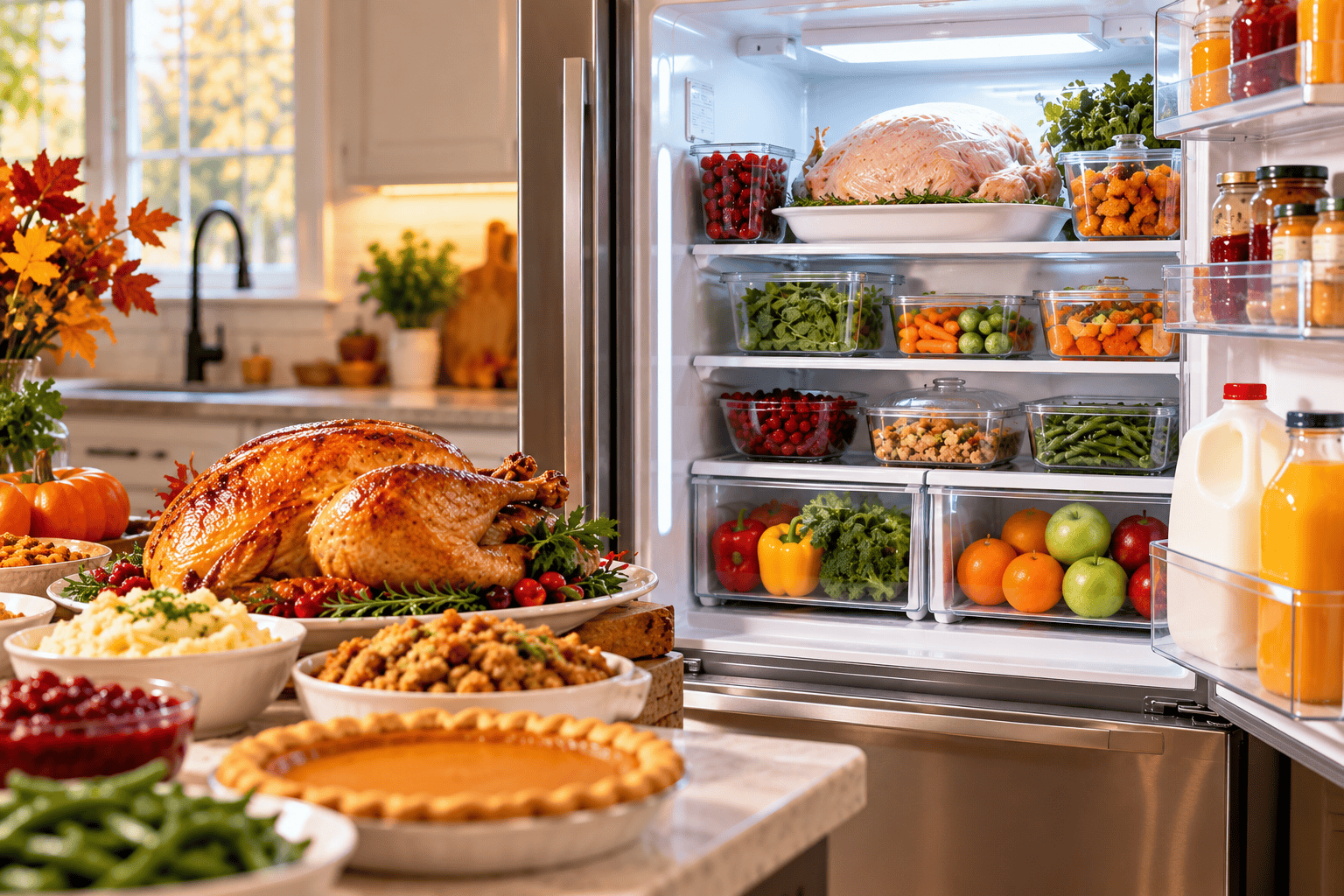
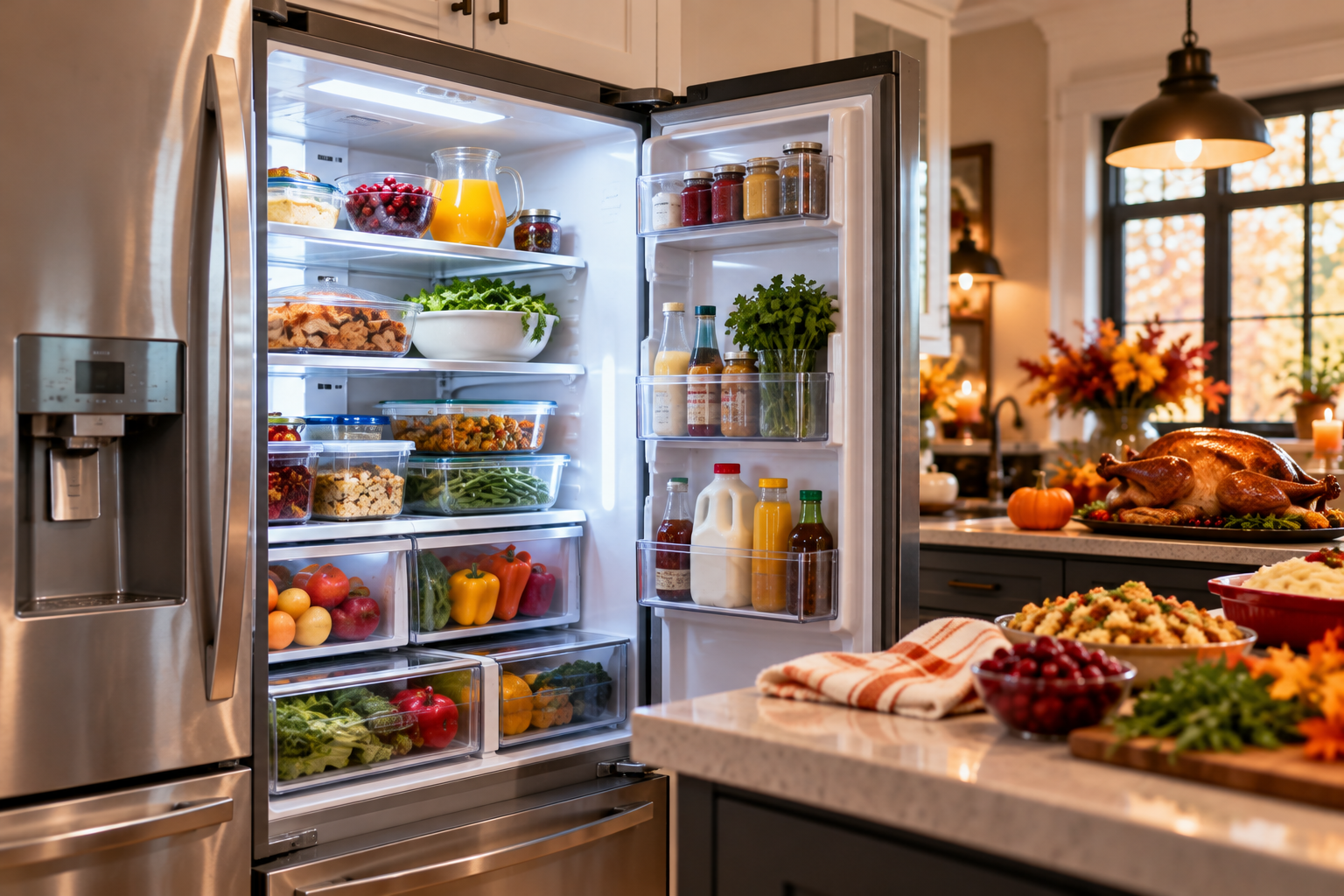
One of the best Thanksgiving refrigerator strategies is to create space before shopping.
Discard expired food. Move nonperishable beverages elsewhere when appropriate. Consolidate duplicate containers. Avoid using the refrigerator as storage for items that do not need refrigeration.
Do not block vents simply to fit one more tray.
Appliance Cowboys’ refrigerator energy-saving tips provide additional habits that can help reduce unnecessary workload.
How to Handle Warm Thanksgiving Leftovers
A refrigerator repair article should not replace official food-safety guidance. Follow current food-safety recommendations for cooling, dividing, and storing cooked food.
From the appliance perspective, avoid placing extremely large, tightly packed quantities into a refrigerator in a way that blocks airflow. Divide food into appropriate containers and allow cold air to circulate.
If the refrigerator cannot maintain a safe storage temperature, do not rely on it for perishable leftovers.
A Pre-Thanksgiving Refrigerator Test
Several days before Thanksgiving, verify cabinet temperature and inspect the door seal.
Listen for abnormal sounds. Check for leaks, heavy frost, or condensation. Make sure interior vents are open. Clean accessible condenser areas if your model requires that maintenance.
Then observe recovery after an ordinary grocery load. A healthy refrigerator should return to its normal operating range.
Testing early gives you time to arrange repair before the appliance is packed with holiday food.
When to Stop DIY Troubleshooting
Basic cleaning, temperature verification, food organization, and gasket inspection are reasonable homeowner tasks.
Stop when troubleshooting requires sealed-system work, refrigerant handling, electrical testing, internal panel removal beyond manufacturer instructions, or bypassing controls.
Burning odors, damaged wiring, repeated breaker trips, water near electrical components, or rapidly rising food temperatures deserve immediate attention.
Appliance Cowboys’ guide on when to skip DIY and call a professional can help you recognize that boundary.
Repair or Replace Before Thanksgiving?
A single repairable component does not necessarily mean a refrigerator needs replacement.
Age, repair history, condition, parts availability, efficiency, and the cost of the current repair all matter. Appliance Cowboys’ guide on how to know whether to repair or replace an appliance explains the factors homeowners can consider.
If the refrigerator is otherwise in good condition, diagnosis may reveal a straightforward repair. If it has multiple recurring problems, replacement may become more practical.
Make that decision before Thanksgiving rather than during the holiday meal.
Thanksgiving Refrigerator Checklist
✓ Verify the actual refrigerator temperature.
✓ Make sure interior vents are not blocked.
✓ Inspect door gaskets.
✓ Confirm doors close completely.
✓ Check for unusual fan or compressor sounds.
✓ Look for excessive frost.
✓ Check for water leaks.
✓ Clean accessible condenser areas if required.
✓ Create space before grocery shopping.
✓ Do not overload shelves or block airflow.
✓ Record any error codes.
✓ Arrange repair if cooling remains unstable.
Refrigerator Repair in Houston Before Thanksgiving
A refrigerator not cooling before Thanksgiving can put an entire holiday meal at risk. The appliance needs to handle groceries before the meal and leftovers afterward, making reliable temperature control one of the most important parts of Thanksgiving preparation.
Appliance Cowboys services refrigerators and other major kitchen appliances in the Houston area. If basic checks do not restore normal cooling, professional diagnosis can identify airflow, fan, sensor, seal, control, or other cooling problems.
Check the refrigerator now, before it is full. A little preparation can give you time to correct a problem before Thanksgiving food starts arriving.
For more help, read our guide to common refrigerator problems.
For more help, read our guide to refrigerator struggles in summer and winter.
For more help, read our guide to when to repair or replace an appliance.
For more help, read our guide to Thanksgiving refrigerator prep.