Ice maker not making enough ice before Thanksgiving? If you are hosting family in Houston, a slow refrigerator ice maker can become a problem when drinks, coolers, and holiday gatherings quickly empty the ice bin. Before assuming the ice maker is broken, check freezer temperature, water flow, filter condition, and simple controls.
This guide explains what to check safely, when slow ice production is normal, and when to schedule appliance repair. It complements our Thanksgiving refrigerator prep advice for holiday food storage.

Why Your Ice Maker Is Not Making Enough Ice Before Thanksgiving
A refrigerator ice maker can seem fine during a normal week but fall behind when family and friends arrive. Extra drinks, repeated freezer-door openings, and a bin that starts nearly empty can make a normal production rate feel inadequate. If your ice maker is not making enough ice, first decide whether demand has increased or the appliance has actually slowed down. For a related holiday cooling checklist, read our Thanksgiving refrigerator preparation guide.
1. Check Freezer Temperature First
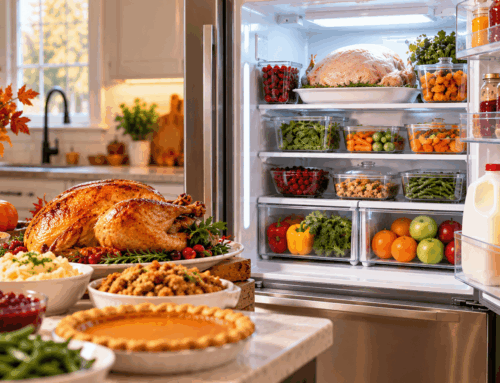
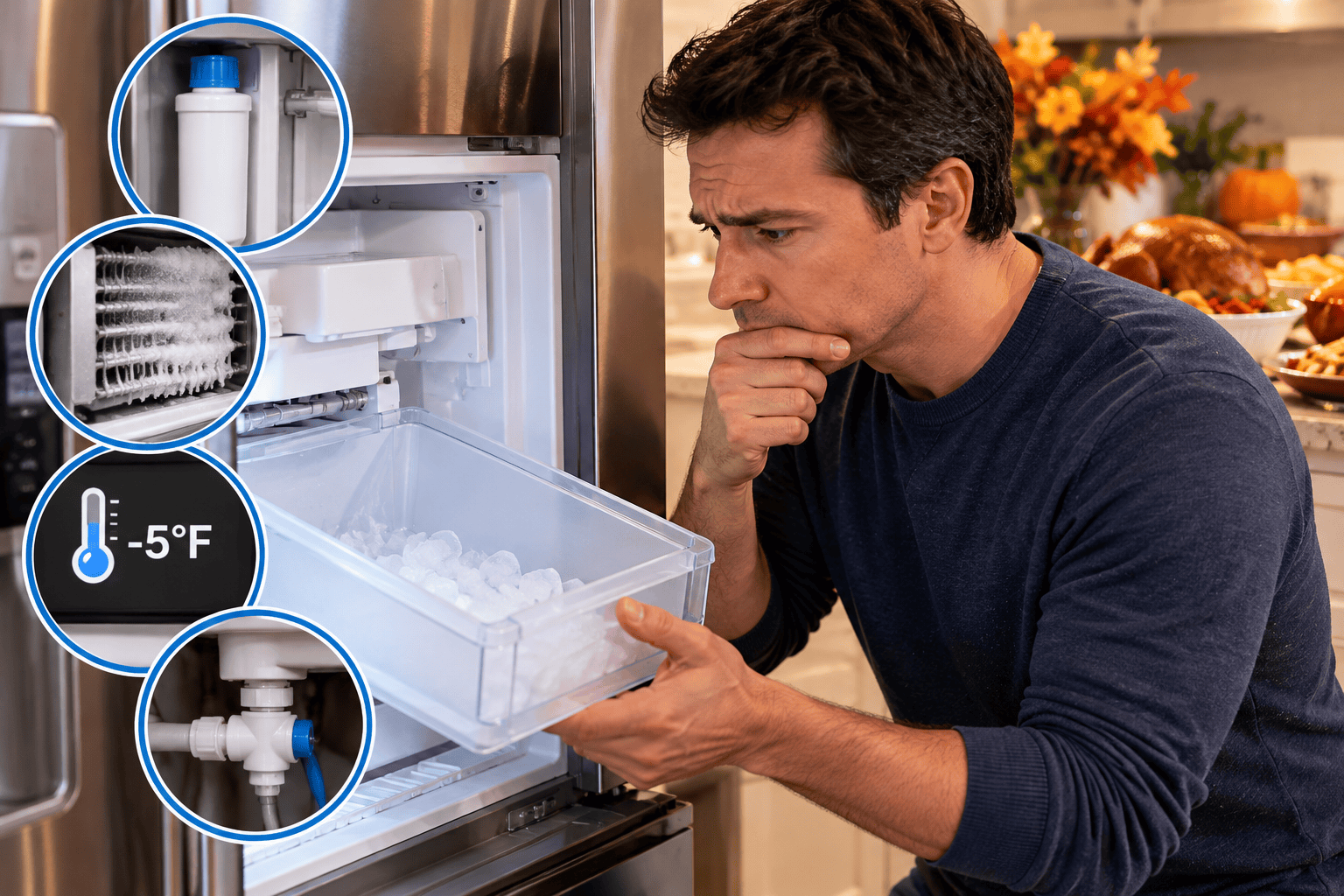
Most refrigerator ice makers need sufficiently cold freezer conditions to cycle normally. As a food-safety baseline, the FDA recommends a freezer temperature of 0°F (-18°C). Some ice maker models have specific operating requirements, so consult the owner’s manual. Put a freezer-safe thermometer in the compartment and check after temperatures stabilize. If the freezer is warmer than expected, ice production may slow or stop. Keep in mind that a refrigerator that seems cool can still have an underlying cooling problem. See our common refrigerator repair problems and refrigerator cooling problems in warm weather for related symptoms.
2. Check the Ice Maker Switch, Arm, and Ice Bin
Some ice makers have a power switch, control-panel setting, or mechanical shutoff arm. Check that the ice maker is enabled and the bin is correctly seated. Ice piled against a sensor or shutoff arm can make the appliance think the bin is full. Remove loose ice carefully using the method recommended by the manufacturer, and do not force the arm or sensor. If the bin contains large fused clumps, investigate temperature swings or an improperly closed freezer door rather than simply breaking the clumps apart.
3. Inspect the Refrigerator Water Filter
A restricted or incorrectly installed water filter can reduce the water available to the ice maker. Check the replacement indicator and the manufacturer’s recommended interval, and use a compatible filter. Some models require a reset or flushing procedure after replacement. Avoid bypassing a filter unless the manufacturer expressly allows it. If the water dispenser is also running slowly, that is a useful clue, although not definitive proof of a filter problem. Our article on when to replace a refrigerator water filter covers filter maintenance and ice quality.
4. Look for Water Supply Problems
A partially closed supply valve, kinked refrigerator water line, low household water pressure, or frozen fill tube may reduce ice output. Without moving or disconnecting the refrigerator, check for visible leaks or an obvious kink in accessible tubing. Never pull the appliance forward if that risks damaging the line or electrical cord. If you suspect a frozen fill tube, water inlet valve failure, or concealed leak, arrange qualified service. Do not use open flames, boiling water, or sharp tools to thaw or clear ice maker parts.
5. Check Freezer Airflow and Door Seals
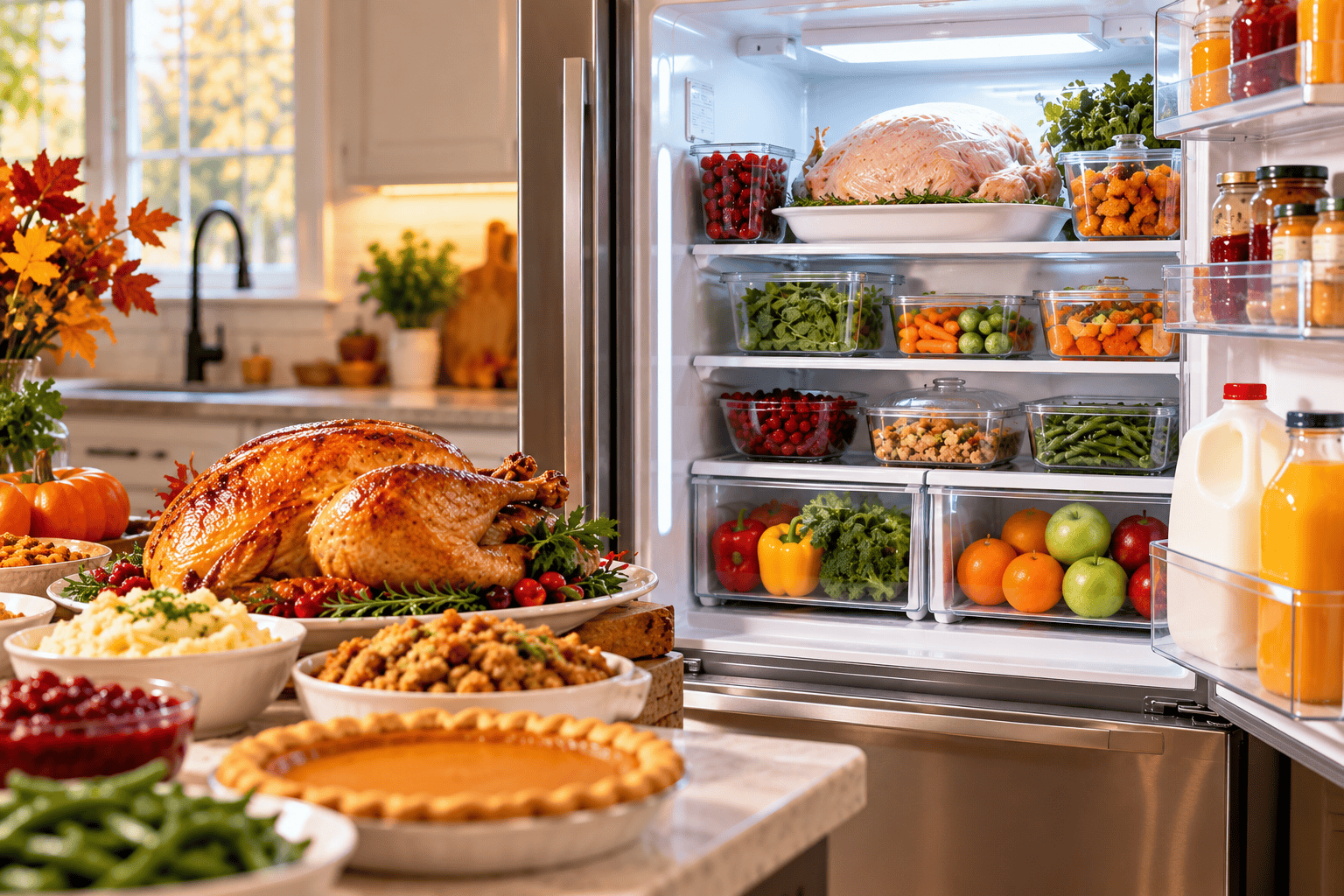
Overpacking the freezer can obstruct vents and interfere with the consistent cooling that ice production requires. Keep vents unobstructed and avoid leaving the door open while arranging holiday food. Inspect door gaskets for crumbs, gaps, or visible damage and make sure packages are not stopping the door from closing. A warm kitchen and frequent door openings can also lengthen recovery time. Our refrigerator troubleshooting guide explains other cooling-related warning signs.
6. Allow Time After Emptying the Ice Bin
Ice makers do not refill an empty bin instantly. Actual daily output depends on the model, freezer temperature, water supply, and how frequently ice is removed. Check your manual for the expected production rate before assuming there is a fault. If guests are coming soon, make extra ice in advance or buy a sealed bag of food-grade ice instead of relying on an already strained appliance. Store ice with clean scoops and containers; do not handle serving ice with bare hands.
7. Watch for Mechanical or Electrical Warning Signs
If the ice maker clicks repeatedly, leaks, makes unusual grinding noises, produces misshapen cubes, or stops cycling despite safe temperatures and adequate water supply, it may need a technician. The fill valve, sensor, motor, control board, or internal ice-making assembly could be involved. Do not dismantle powered components or bypass safety interlocks. Our low ice production troubleshooting article covers related causes, while Viking ice maker troubleshooting may help owners of that brand recognize model-specific symptoms.
How to Tell Whether You Have an Ice Maker Problem or a Refrigerator Problem
If both refrigerator and freezer temperatures are unstable, the ice maker may be a symptom of a broader cooling issue. Warm food, excessive frost, a constantly running compressor, and a door that will not seal properly point toward the refrigeration system rather than just the ice maker. If cooling is normal but ice production is weak, focus first on the bin, controls, filter, and water supply. For additional context, see a warm refrigerator with a cold freezer and preventive appliance maintenance tips.
Thanksgiving Ice Maker Preparation Checklist
- Check freezer temperature with a thermometer and aim for 0°F (-18°C).
- Verify that the ice maker is switched on and its bin is correctly installed.
- Inspect the shutoff arm or bin sensor without forcing it.
- Review the water filter’s condition and replacement schedule.
- Look for visible water leaks and accessible line kinks.
- Keep freezer vents clear and make sure the door seals fully.
- Start collecting extra ice several days before guests arrive.
- Use clean storage containers and have backup ice available.
- Schedule diagnosis early if the ice maker remains unusually slow.
When to Schedule Ice Maker Repair in Houston
If basic checks do not restore normal ice production, or if you find leaks, electrical symptoms, or recurring freeze-ups, schedule professional diagnosis before holiday hosting. Appliance Cowboys provides appliance-repair information for Houston-area homeowners. For service options, visit the appliance repair services page and confirm availability for your ice maker model. To prepare the rest of the kitchen, read our Thanksgiving kitchen appliance checklist and holiday appliance emergency prevention tips.
Frequently Asked Questions About an Ice Maker Not Making Enough Ice
Why is my ice maker making ice so slowly?
Slow ice production can result from warm freezer temperatures, a restricted water filter, limited water supply, blocked airflow, or a normal production rate that cannot keep up with heavy use.
What temperature should my freezer be for ice making?
A freezer temperature of 0°F (-18°C) is the recommended food-storage target. Follow your ice maker’s manual for model-specific operating requirements.
Can a clogged refrigerator water filter reduce ice production?
Yes. A restricted or incorrectly installed filter can reduce water flow and may cause smaller cubes or slower ice production.
Why is my ice maker working but not filling the bin?
Check whether the bin is seated correctly, the shutoff arm or sensor is obstructed, and the appliance is producing ice at its normal rate. A water supply or mechanical issue may also be responsible.
How can I get more ice before Thanksgiving guests arrive?
Start early, maintain the correct freezer temperature, keep vents clear, check the water supply, and store clean extra ice. Do not assume a repair or adjustment will instantly increase the manufacturer’s rated capacity.
For general cold-food safety, see the FDA refrigerator and freezer storage guidance. Check your refrigerator manufacturer’s manual before adjusting or servicing ice maker components.