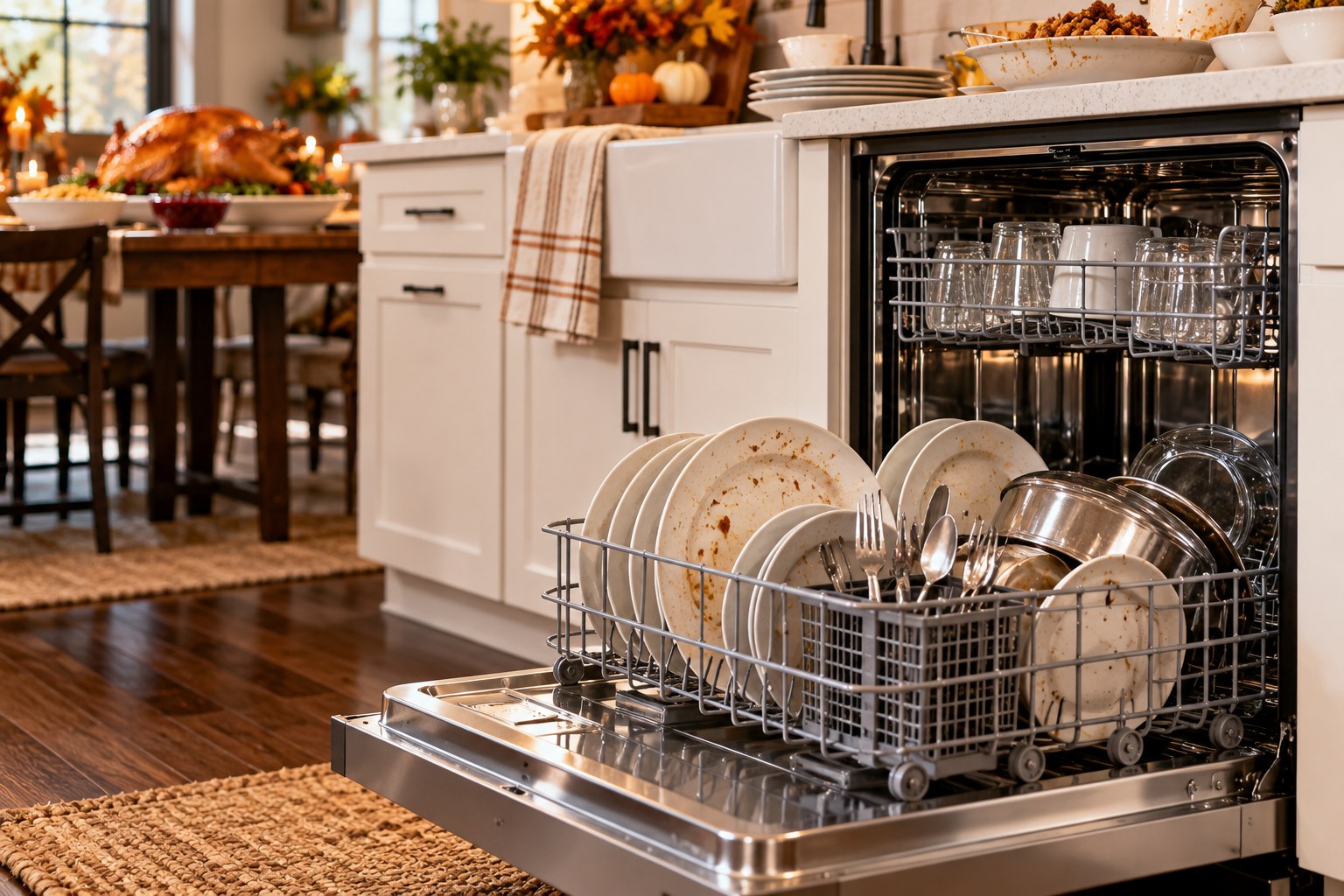
Dishwasher problems before Thanksgiving can disrupt meal preparation and cleanup. Thanksgiving can turn a normally quiet dishwasher into one of the hardest-working appliances in the kitchen. Plates from appetizers, mixing bowls, casserole dishes, glasses, serving utensils, and multiple rounds of cookware can create several loads in a single day. If you are already noticing dishwasher problems before Thanksgiving, it is better to investigate them now than to discover a failure after the first large holiday meal.
A dishwasher that leaves food behind, holds water in the bottom, leaks onto the floor, or finishes with wet dishes can slow down the entire kitchen. Some symptoms come from simple loading or maintenance issues, while others point to a pump, valve, heating, sensor, hose, seal, or electrical problem that may need professional diagnosis. If you are preparing the whole kitchen for the holiday, review Appliance Cowboys’ Thanksgiving appliance tips along with the dishwasher checks below.
The goal is to avoid taking the dishwasher apart right before Thanksgiving. Instead, test it early, watch for warning signs, handle safe maintenance items, and leave enough time for repair if the appliance isn’t operating normally.
Why Dishwasher Problems Before Thanksgiving Deserve Attention
During a normal week, a dishwasher may run once a day or less. Thanksgiving changes that pattern. You may run a load before guests arrive, another after cooking, and one or more after dinner. More cycles mean more demand on the drain system, wash pump, spray arms, heating system, detergent dispenser, door seal, and water supply.
Holiday cookware also tends to be harder to clean. Starchy potatoes, baked cheese, gravy, grease, dried sauces, and casserole residue can challenge a dishwasher that was already losing cleaning performance. A small problem that was easy to ignore in October can become obvious when you load the machine repeatedly in November.
Run a normal test load several days before Thanksgiving. Use dishes that let you judge cleaning and drying performance, then check the tub after the cycle. The dishwasher should drain normally, the door area should remain dry, and dishes should come out reasonably clean for the selected cycle and detergent.
1. The Dishwasher Is Not Cleaning Dishes Well
Poor cleaning is one of the most noticeable dishwasher problems before Thanksgiving because the appliance may complete the cycle without displaying an obvious error. You open the door expecting clean plates and instead find food particles, cloudy residue, greasy surfaces, or detergent that didn’t dissolve properly.
Start with the loading pattern. Large pans or cutting boards can block spray arms or prevent water from reaching upper-rack items. Make sure the spray arms can rotate freely before starting the machine. Inspect visible spray holes for debris and check the filter according to the manufacturer’s instructions. A dirty filter can allow food particles to circulate instead of leaving the wash system.
Water temperature, detergent, water pressure, and the wash system itself can also affect results. If the dishwasher has been getting progressively worse, use Appliance Cowboys’ guide to a dishwasher not cleaning dishes well to narrow down the likely causes. Persistent weak washing may require inspection of the circulation pump, inlet valve, sensor system, or other components.
2. Dishwasher Not Draining: Standing Water After a Cycle
Standing water is a problem you do not want during a house full of Thanksgiving guests. A small amount of water in a designed sump area can be normal on some models, but a visible pool covering the bottom of the tub, dirty water returning after a cycle, or water that will not drain deserves attention.
After disconnecting power and following the owner’s instructions, check for obvious food debris around the accessible filter and drain area. A kinked drain hose, clogged filter, blocked air gap where applicable, disposal connection problem, or drain-pump issue can prevent normal drainage. If a garbage disposal was installed recently, an installation detail at the dishwasher connection can also cause drainage trouble.
For a more focused walkthrough, see how to repair a dishwasher that is not draining. Avoid repeatedly running the dishwasher when dirty water remains in the tub. Repeated cycles do not fix a blocked or failed drain system and can create odor, cleaning, or overflow problems.
3. The Dishwasher Is Leaking From the Door or Bottom
A dishwasher leak can quickly turn a holiday cleanup problem into a flooring and cabinet problem. Look for moisture around the front corners, underneath the unit, or along the toe-kick area during a test cycle. Do not assume every leak is caused by the door gasket.
Overloading can push large items against the door or redirect spray toward areas that are not designed to handle concentrated water. Excessive or incorrect detergent can create suds that escape the tub. A damaged door seal, loose hose, pump seal, inlet connection, or internal component can also leak. The location and timing of the water often help a technician determine where to inspect first.
If you see water around the machine, stop and confirm the source is the dishwasher before running another load. Appliance Cowboys’ article on a dishwasher leaking from the bottom or door explains several common leak patterns. Stop using the appliance if you see active leaks, smell electrical odors, or notice water near wiring until it is inspected.
4. Dishwasher Not Drying Dishes at the End of the Cycle
A dishwasher that cleans correctly but leaves everything soaked can still create extra work on Thanksgiving. Drying performance depends on the model. Some dishwashers use a heated-dry system, some rely heavily on rinse aid and condensation drying, and newer energy-efficient designs may behave differently from older machines.
First, confirm that the selected cycle includes the drying option you expect. Check rinse-aid level if your model uses it, and avoid nesting bowls, cups, and utensils in ways that trap water. Plastic items commonly retain more surface moisture than glass or ceramic, so judge the symptom across several types of dishes.
If drying performance changed suddenly, there may be a heating, vent, fan, sensor, or control issue. Read the guide to a dishwasher not drying dishes for additional causes and repair indicators. A dishwasher that also fails to heat water properly may show both cleaning and drying symptoms.
5. The Dishwasher Smells Bad Before You Even Run It
Holiday guests make dishwasher odors especially unwelcome. Odors often develop when food debris collects in the filter, drain area, door lip, gasket, or other areas that stay damp. A drainage problem can make the smell worse because dirty water stays where it shouldn’t.
Clean accessible components according to the manufacturer’s directions and remove visible food debris. Wipe the door edges and gasket with a suitable cleaner and soft cloth. Do not mix household chemicals or pour aggressive drain cleaners into the dishwasher. Products intended for a sink drain can damage dishwasher components or create unsafe fumes.
If the odor returns quickly after cleaning, check whether the machine is draining completely. A persistent sewage-like smell can also point to a plumbing or drain-connection issue rather than ordinary food residue.
6. The Dishwasher Will Not Start or Stops Mid-Cycle
A no-start condition can come from something as simple as a door that is not fully latched, a control lock, delayed-start setting, tripped breaker, or interrupted power. It can also result from a failed latch, control, wiring issue, water-supply problem, or another component that prevents the cycle from continuing.
Before Thanksgiving, run the dishwasher through a complete cycle rather than assuming that lights on the control panel mean the machine is ready. If it stops unexpectedly, note when the failure occurs. Does it fill and then stop? Does it wash but fail to drain? Does the display show an error code? Those details can make diagnosis more efficient.
If the breaker repeatedly trips, the appliance smells electrically hot, or the dishwasher shows signs of water reaching electrical areas, stop using it. Those are not good candidates for last-minute holiday DIY.
7. The Dishwasher Is Making New or Unusual Noises
Dishwashers normally make filling, spraying, pumping, and draining sounds. The concern is a sound that is new, unusually loud, grinding, buzzing without normal water movement, or connected to poor performance. A utensil contacting a spray arm can create a simple repetitive knock, while debris in a pump area or a failing mechanical component can sound very different.
Pause the cycle safely and check whether a dish, utensil, or rack item is interfering with the spray arms. If the noise continues with a correctly loaded machine, do not keep running repeated cycles just to see whether it disappears. When deciding whether service is needed, combine the sound with other symptoms such as weak cleaning, standing water, or leaking.
For a broader symptom comparison, Appliance Cowboys’ guide to common dishwasher issues and fixes can help you distinguish basic maintenance problems from repair symptoms.
Quick Checklist for Dishwasher Problems Before Thanksgiving
- Clean the removable filter according to your model’s manual.
- Check that dishes do not block spray arms or the detergent dispenser.
- Confirm rinse aid and the selected wash and drying settings.
- Run a complete test cycle before guests arrive.
- Check for standing water, leaks, unusual noises, and food residue.
- Record error codes and the model number before requesting service.
- Stop using the machine if it leaks near electrical components, smells burned, or repeatedly trips a breaker.
A Pre-Thanksgiving Dishwasher Test You Can Do This Week
Give yourself enough time for a repair appointment by testing the dishwasher well before the holiday. Start by cleaning the filter and visible wash area, load a representative mix of dishes, use your usual detergent, and select a normal cycle. Don’t test an unfamiliar setting you never plan to use on Thanksgiving.
During the cycle, listen for normal filling and washing. Look around the floor and cabinet edges for moisture. After the cycle, check whether the tub drained, whether food residue remains, and whether drying performance is normal. If you notice a problem, run through safe user-level checks from the owner’s manual rather than immediately disassembling panels.
This is also a good time to review how to get the most out of your dishwasher. Correct loading, clean filters, unobstructed spray arms, suitable detergent, and routine maintenance can improve performance even when no component has failed.
What Not to Put in the Dishwasher During Thanksgiving Cleanup
A busy holiday kitchen encourages people to put almost everything into the dishwasher, but that can create damage or poor results. Follow the care instructions for your cookware and serving pieces. Cast iron, many sharp knives, delicate glassware, wooden items, certain insulated containers, hand-painted pieces, and some nonstick cookware may require hand washing depending on the manufacturer.
Also remove large bones, toothpicks, labels, food packaging, and heavy food scraps before loading. The dishwasher is designed to wash dishes, not act as a garbage disposal. Hard debris can obstruct filters or pumps, while loose paper and labels can break apart and collect in the wash system.
Avoid overloading simply to finish one fewer cycle. When dishes block each other or stop the spray arm from moving, you may end up washing the same items twice, which costs more time during an already busy cleanup.
When Dishwasher Troubleshooting Should Stop
User-level checks such as loading correctly, cleaning an accessible filter, checking a visible hose kink, confirming settings, or removing an obstruction from a spray arm can be reasonable when performed according to the owner’s manual. Internal electrical, pump, valve, heating, and leak repairs are different.
Stop DIY troubleshooting when there is an active leak you cannot identify, repeated breaker trips, a burning smell, damaged wiring, a dishwasher that will not stop filling, or a component that requires significant disassembly. Water and electricity in the same appliance make careless troubleshooting especially risky.
If you are unsure where that line is, review Appliance Cowboys’ guidance on when to skip DIY and call a professional. The goal before Thanksgiving is a reliable dishwasher, not a partially disassembled appliance the night before guests arrive.
Should You Repair the Dishwasher Before Thanksgiving or Wait?
If the dishwasher has a minor loading or maintenance issue and returns to normal after a safe correction, you may be ready for the holiday. If it is leaking, failing to drain, stopping mid-cycle, tripping a breaker, or repeatedly leaving dishes dirty, waiting can turn a manageable repair into a Thanksgiving-day inconvenience.
Consider how heavily you depend on the dishwasher. A household serving a large group may run several cycles in a short period, so marginal performance matters more than it would on a quiet weekday. Schedule diagnosis early enough to identify the problem and, when necessary, obtain the appropriate part.
If the dishwasher is older and repair decisions are becoming frequent, compare appliance repair versus replacement using the repair cost and condition of the machine. Do not replace an appliance solely because Thanksgiving is approaching, but do not ignore a pattern of failures either.
Prepare the Rest of the Kitchen Too
The dishwasher is only one part of Thanksgiving cleanup. The refrigerator has to hold ingredients and leftovers, the oven and range handle long cooking sessions, the garbage disposal may see extra food waste, and the vent hood may run for hours. A failure in one appliance can put more pressure on the others.
Use Appliance Cowboys’ guide to prepare your kitchen for Thanksgiving cooking as a broader checklist. Testing appliances ahead of time is especially useful because intermittent problems are easier to address before the holiday than during dinner service.
For the dishwasher, keep the filter clean, avoid overloading, use the correct detergent, watch for leaks, and make sure the machine completes a full wash-and-drain cycle before Thanksgiving week gets hectic.
Frequently Asked Questions About Thanksgiving Dishwasher Problems
Why is my dishwasher leaving food on dishes?
Blocked spray arms, overloaded racks, a dirty filter, unsuitable detergent, or a water-supply problem can reduce cleaning. Follow the owner’s manual for safe filter cleaning and loading. If correctly loaded dishes stay dirty over several cycles, have the wash system diagnosed rather than replacing parts based only on the symptom.
Is standing water in the dishwasher always a problem?
A little water below the filter in the sump can be normal for some models. A pool across the tub floor, dirty water flowing back into the machine, or water that remains after the drain cycle needs attention. Don’t keep loading and running the dishwasher until you understand why it isn’t draining.
Should I rinse Thanksgiving dishes before loading them?
Scrape off bones and large food scraps, then follow the dishwasher and cookware instructions. ENERGY STAR dishwasher guidance recommends scraping rather than pre-rinsing and running full loads. Full does not mean overcrowded: leave spray paths open and make sure the spray arms can rotate freely.
Can I keep using a dishwasher that leaks?
Stop the cycle and stop using the appliance until the source is understood. If safe to do so from a dry location, disconnect its power and shut off its water supply. Do not touch wet plugs or wiring. A leak can damage cabinets and flooring and may create an electrical hazard.
When should I book dishwasher repair before Thanksgiving?
Schedule a diagnosis as soon as a persistent problem appears, especially poor drainage, leaks, repeated shutdowns, or a sudden change in cleaning performance. Booking ahead gives time for diagnosis and any required parts. Appointment availability and parts lead times vary, so a pre-holiday inspection does not guarantee completion before Thanksgiving.
Schedule Dishwasher Repair in Houston Before Thanksgiving
Dishwasher problems before Thanksgiving are easier to manage when you find them early. Poor cleaning, standing water, leaks, wet dishes, unusual odors, failure to start, and new noises can all signal what the appliance is doing wrong. Some can be corrected with basic maintenance; others require testing and repair.
Appliance Cowboys services dishwashers and other major kitchen appliances in the Houston area. If basic checks do not restore normal operation, arrange dishwasher repair in Houston before holiday traffic in the kitchen reaches its peak. A dependable dishwasher will not cook the turkey, but it can make the hours after Thanksgiving dinner considerably easier.
Test the appliance now, note any symptoms, and address problems before the first holiday load is stacked in the racks. That gives you the best chance of spending Thanksgiving with guests instead of troubleshooting a kitchen appliance.