garbage disposal humming before Thanksgiving is an important holiday appliance warning sign for Houston homeowners. Learn practical checks, safety precautions, and when to call for professional repair.
Thanksgiving puts unusual pressure on a garbage disposal. Vegetable trimmings, plate scrapings, cooking residue, and cleanup from a large meal can reach the sink within a few hours. If your garbage disposal is humming before Thanksgiving, buzzing without grinding, draining slowly, or stopping unexpectedly, deal with the symptom before guests arrive. Appliance Cowboys’ guide to a garbage disposal not working covers several basic failure patterns, while its article about a garbage disposal humming or buzzing focuses on one of the most common warning sounds.
Why Garbage Disposals Struggle Around Thanksgiving
A disposal that handles light weekday cleanup can become overloaded during a holiday. Fibrous vegetables, potato peels, grease, bones, fruit pits, coffee grounds, and large amounts of food can create jams or contribute to drain restrictions. Guests may also put items into the sink without knowing what your disposal can handle.
A humming sound often means electricity is reaching the motor while the grinding mechanism cannot rotate normally. Continuing to run a jammed disposal can overheat the motor or trip overload protection. A completely silent unit can point toward a different problem involving power, the reset, switch, wiring, or motor.
1. Turn the Disposal Off Before Inspecting Anything
Safety comes first. Turn the disposal off at the wall switch and follow the manufacturer’s instructions before inspection. Never put your hand into the disposal chamber, even when the wall switch is off. A switch can be bumped or an electrical problem can exist.
If the appliance has a manufacturer-approved jam-clearing method, use only the specified tool and procedure. Some models have a bottom socket intended for a wrench. Others use different designs. If you cannot identify the correct method, stop and arrange service.
2. A Humming Sound Often Means the Mechanism Is Stuck
When the unit hums but does not grind, a foreign object or compacted food may be preventing rotation. Utensils, small bones, fruit pits, glass fragments, or dense food waste can create a jam.
Do not keep flipping the switch. Repeated attempts can overheat the motor. Appliance Cowboys’ garbage disposal humming or buzzing guide explains why this symptom deserves attention. During Thanksgiving week, fix the problem before adding more waste or running connected kitchen equipment.
3. Check the Reset Only After the Unit Has Cooled
Many disposals have an overload protector and reset button. If the motor overheats, the protector may shut the appliance off.
Allow the unit to cool and follow the manufacturer’s reset procedure. A reset that restores operation once may indicate an overload. A disposal that repeatedly trips is telling you that a jam, failing motor, electrical problem, or excessive load remains.
Repeatedly pressing the reset button is not a repair.
4. Keep Thanksgiving Grease Out of the Drain
Turkey drippings, gravy fat, butter, cooking oil, and grease should not go through the disposal. Hot grease may enter as a liquid but can cool and accumulate farther down the drain.
Scrape fats and oils into an appropriate container for disposal according to local guidance. A disposal chops some food waste; it does not make grease safe for household plumbing.
Heavy grease can combine with food particles and contribute to slow drainage, odors, and backups during the busiest cleanup of the year.
5. Be Careful With Fibrous and Starchy Foods
Celery strings, corn husks, onion skins, artichoke leaves, and other fibrous material can wrap around internal components. Large amounts of potato peels, pasta, rice, and other starchy foods can form thick masses in drains.
Thanksgiving produces many of these foods at once. Use the trash or compost system when appropriate rather than treating the disposal as a bulk food processor.
Feed only small amounts of disposal-safe waste and use water as directed by the manufacturer.
6. If the Sink Drains Slowly, Stop Adding Waste
A slow sink can indicate a developing restriction even when the disposal still runs. Adding more scraps can turn a partial blockage into a complete backup.
If the sink begins filling while the disposal operates, turn the unit off and investigate. Do not use chemical drain cleaners unless the appliance and plumbing manufacturers specifically permit them.
A chemical left in the drain can also create a hazard for a technician who later opens the plumbing.
7. Dishwasher Drainage Can Be Connected
In many kitchens, the dishwasher drain connects near the sink or disposal. A blockage or installation issue can therefore affect dishwasher drainage.
If the dishwasher suddenly leaves standing water at the same time the sink or disposal is behaving abnormally, the symptoms may be related. Appliance Cowboys’ guide to a dishwasher not draining provides additional context.
Do not run repeated dishwasher cycles into a sink system that is already backing up.
8. Listen for Grinding, Rattling, or Metal-on-Metal Sounds
A new rattling or metallic grinding noise can indicate a foreign object or damaged internal component.
Turn the disposal off immediately. Continuing to operate it can damage the unit or break an object into smaller pieces. Never reach inside to retrieve an object by hand.
If a visible object cannot be safely removed using manufacturer-approved procedures, call for service.
9. A Silent Disposal May Have a Different Problem
If the disposal makes no sound, check only basic items that are safe for a homeowner: the normal switch position, manufacturer reset procedure, and household breaker when appropriate.
Do not repeatedly reset a breaker that trips again. A failed switch, wiring problem, motor failure, or electrical connection may require professional diagnosis.
Water around electrical components increases the urgency.
10. Check for Leaks Under the Sink
Thanksgiving cleanup can reveal leaks because the disposal and sink are used more heavily.
Inspect the cabinet floor for water. Look for moisture around the sink flange, dishwasher connection, drain connections, and disposal body without touching electrical connections.
A leak from the disposal housing itself may not be solved by tightening a drain fitting. Dry the area and stop using the unit if water is reaching wiring or outlets.
11. Do Not Overload the Disposal During Cleanup
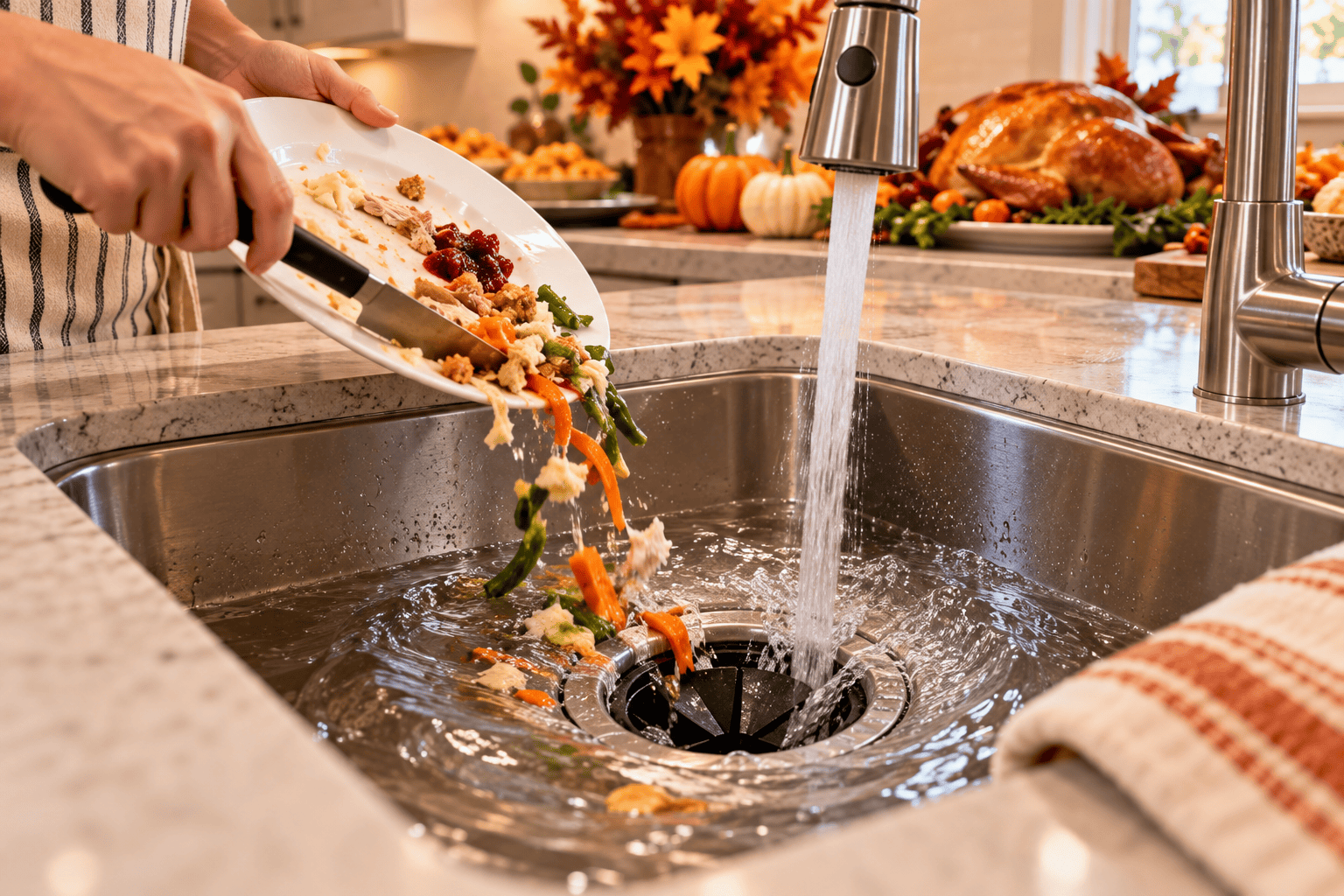
Scrape plates into the trash first. Process only small amounts of suitable food waste and allow the disposal to clear before adding more.
Running a large volume of leftovers through the disposal at once increases the chance of a jam. Guests may not know your routine, so a simple reminder to scrape plates can prevent a holiday problem.
Appliance Cowboys’ Thanksgiving appliance tips can help coordinate this with checks for other heavily used kitchen appliances.
12. Test the Disposal Before Thanksgiving Day
Run the disposal several days before Thanksgiving using normal water flow and a small amount of appropriate waste. Listen for changes in sound and confirm that the sink drains normally.
Check under the cabinet afterward for moisture. This simple test provides time to schedule service rather than discovering a failure while preparing dinner.
What Not to Put Down the Disposal During Thanksgiving
Avoid bones, fruit pits, large quantities of peels, fibrous vegetable waste, grease, cooking oil, nonfood items, glass, metal, plastic, and anything prohibited by the disposal manufacturer.
Even foods that seem soft can become a problem when several pounds of scraps are introduced quickly. When in doubt, put the waste in the trash or appropriate compost stream instead.
Prepare the Whole Kitchen for Holiday Cleanup
A disposal does not work in isolation. Sink drainage, dishwasher discharge, water supply, and counter-space planning all affect cleanup.
Appliance Cowboys’ guide to preparing your kitchen for Thanksgiving provides a broader checklist. Test the dishwasher, clear the sink area, make sure trash containers have capacity, and decide how grease and large food scraps will be handled before cooking begins.
Planning these details reduces the temptation to force everything down the disposal at the end of a long meal.
When to Stop DIY Troubleshooting
Stop if the unit repeatedly trips, leaks from the housing, smells electrically burned, sparks, has damaged wiring, will not turn after approved jam-clearing steps, or requires electrical disassembly.
A disposal combines electricity, water, sharp internal components, and plumbing. That combination makes improvisation risky.
Appliance Cowboys’ guide on when to skip DIY and call a professional is especially relevant when a basic reset or safe cleaning step does not solve the problem.
Thanksgiving Garbage Disposal Checklist
✓ Test the disposal before the holiday.
✓ Listen for humming, rattling, or grinding.
✓ Confirm the sink drains quickly.
✓ Check the cabinet for leaks.
✓ Keep grease and oil out of the drain.
✓ Avoid bones, pits, and fibrous scraps.
✓ Scrape plates before rinsing.
✓ Do not overload the unit.
✓ Never put your hand inside the disposal.
✓ Use only manufacturer-approved jam-clearing methods.
✓ Do not repeatedly reset an overloaded unit.
✓ Schedule repair if the problem returns.
Garbage Disposal Repair in Houston Before Thanksgiving
A garbage disposal humming before Thanksgiving is a warning worth addressing early. A jammed mechanism, overload, drain restriction, leak, switch problem, or failing motor can turn holiday cleanup into a much larger problem.
Appliance Cowboys services garbage disposals and other major kitchen appliances in the Houston area. Test the disposal before guests arrive and keep unsuitable Thanksgiving food waste out of the sink.
A dependable disposal is easy to overlook when it works. During a holiday meal, keeping the sink draining and cleanup moving can make a major difference.
Related appliance repair information: prepare your kitchen for Thanksgiving.