vent hood problems before Thanksgiving: Check kitchen exhaust airflow, fan noise, grease filters, and controls before the holiday rush.
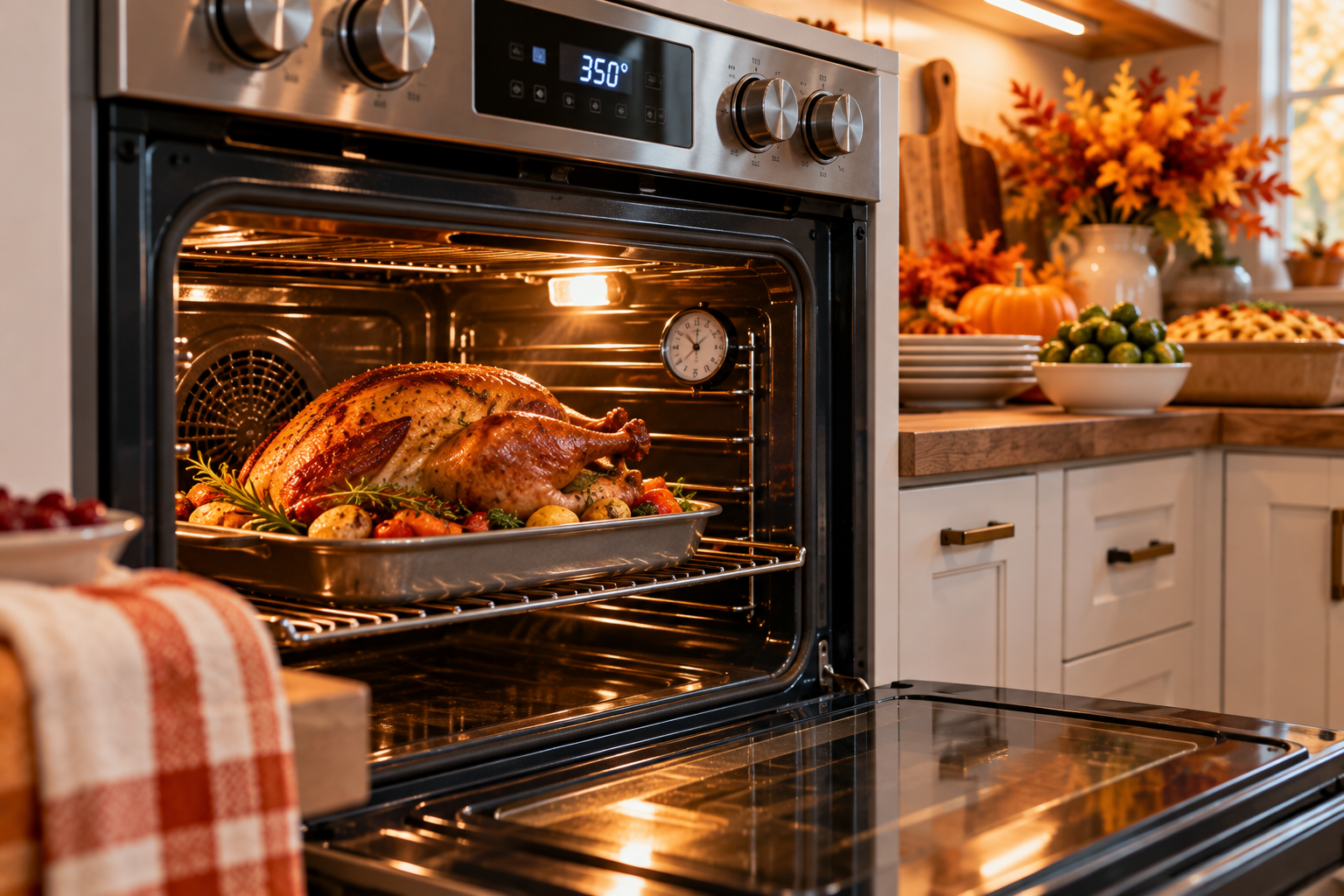
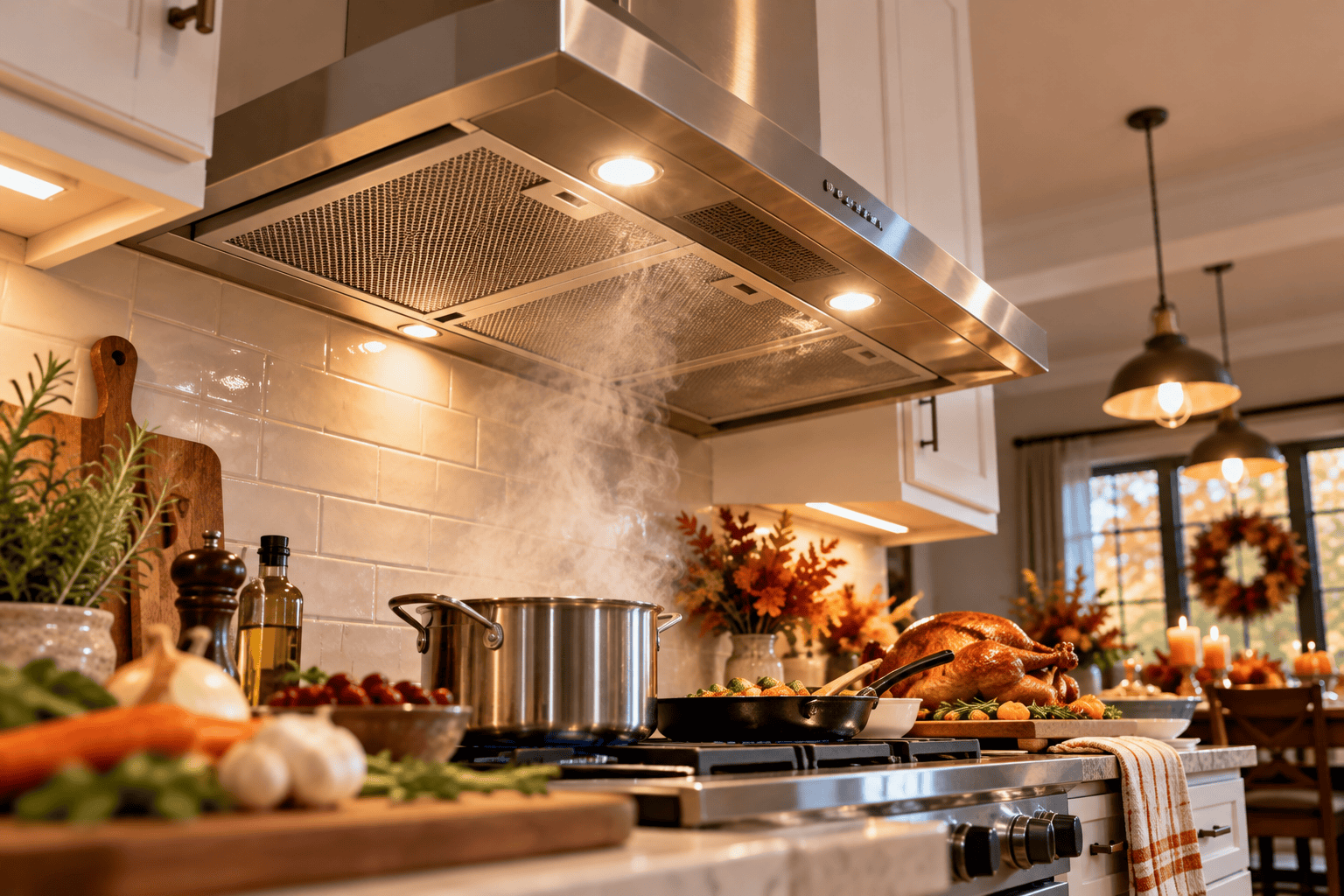
Thanksgiving can keep an oven, range, and cooktop running for hours. With roasting, sautéing, boiling, frying, and reheating happening close together, the vent hood has an important job: helping move cooking vapors, grease, odors, and heat away from the cooking area. If the hood is already noisy, weak, greasy, or unreliable, Thanksgiving can make the problem much more noticeable.
Vent hood problems before Thanksgiving are worth checking early because many symptoms develop gradually. A fan may still run while moving less air than it used to. A motor may become louder over time. Filters can collect enough grease to restrict airflow. Lights or controls may become intermittent. Test the hood before the holiday and include it when reviewing Appliance Cowboys’ Thanksgiving appliance tips for the rest of the kitchen.
Why the Vent Hood Matters During Thanksgiving Cooking
A normal week may involve one burner and a short cooking session. Thanksgiving can mean multiple burners, a hot oven, simmering sauces, frying, and several hours of continuous kitchen activity. That extra cooking produces more moisture, heat, odors, and airborne grease.
A properly operating hood helps manage those conditions according to its design. A ducted hood exhausts air outside, while a recirculating model filters and returns air to the room. Knowing which type you have helps set realistic expectations. The hood does not replace general kitchen ventilation or safe cooking practices, but a noticeable drop in its normal performance should not be ignored.
1. The Vent Hood Fan Runs but Barely Pulls Air
Weak airflow is one of the easiest problems to overlook because the motor may sound normal. Start with the filters. Grease-loaded mesh or baffle filters can restrict airflow, and recirculating hoods may also use charcoal filters that require periodic replacement.
Follow the manufacturer’s instructions for filter removal, cleaning, and replacement. Some metal filters are dishwasher-safe, while others require hand cleaning. Do not assume every filter can be washed.
After servicing the filters, test the hood again. If airflow remains much weaker than normal, the problem may involve the blower wheel, motor, ductwork, damper, or another component. For Thanksgiving preparation, weak airflow matters most when several cooking zones are operating at once.
2. The Range Hood Is Making a New or Loud Noise
Fans naturally create sound, especially at high speed, but grinding, rattling, scraping, squealing, or a sudden increase in vibration can indicate a problem.
A loose filter or panel may rattle. Grease buildup can affect a blower wheel. A foreign object can contact a moving part. Bearings or the fan motor can also wear over time.
Appliance Cowboys’ guide to a noisy vent hood explains several common causes and safe checks. If the sound suggests a moving component is striking something, turn the hood off rather than running it for hours through Thanksgiving cooking. Note whether the noise changes with fan speed.
3. Grease Is Building Up Around the Hood
Grease accumulation is expected over time, but heavy buildup on filters, the underside of the hood, cabinets, or nearby surfaces can signal overdue maintenance or poor capture performance.
Clean accessible surfaces according to the manufacturer instructions. Avoid spraying cleaner directly into motors, switches, wiring, or light sockets. Grease-coated filters should be cleaned or replaced at the recommended interval.
Thanksgiving is a good deadline for this maintenance because holiday cooking usually produces more grease and vapor than an ordinary meal.
4. The Fan Will Not Turn On
If the hood is completely silent, confirm the control setting and check whether other hood functions have power. Some units use electronic controls, touch panels, remote controls, or separate fan-speed switches.
A tripped breaker, failed switch, control-board problem, motor failure, loose connection, or other electrical issue can prevent operation. Do not open electrical housings or test live circuits unless you are qualified to do so.
If a breaker repeatedly trips, the hood smells electrically hot, or controls behave unpredictably, stop using the appliance and arrange service.
5. The Fan Runs at Only One Speed
A multi-speed hood that suddenly works at only one setting may have a switch, control, motor, capacitor, or electronic problem depending on its design.
This may seem minor if the remaining speed still works, but Thanksgiving often requires adjusting ventilation as cooking intensity changes. Low speed may be inadequate during frying or high-heat cooking, while a high-only fan may be unnecessarily loud during lighter use.
Test every speed before the holiday. If one or more settings fail consistently, record which ones work and which do not.
6. The Vent Hood Light Is Flickering or Not Working
Lighting is more than cosmetic when you are checking several pans at once. First, make sure the bulb or LED module is the correct type for the hood.
If a replaceable bulb is accessible, disconnect power and follow manufacturer instructions. A new bulb that still does not work may point to a socket, switch, wiring, transformer, LED driver, or control issue.
Flickering accompanied by electrical odors, visible arcing, or repeated failures deserves professional attention. Do not install a higher-wattage bulb than the hood specifies.
7. Smoke and Odors Linger Longer Than They Used To
If cooking odors or visible vapors remain in the kitchen longer than normal, compare the current performance with how the hood used to behave.
Dirty filters are a common place to start. For ducted systems, a stuck exterior damper, obstructed duct, disconnected duct section, or blower problem can also reduce exhaust performance.
For recirculating hoods, charcoal filters lose effectiveness and need replacement. These hoods do not exhaust heat and moisture outdoors, so expectations differ from ducted systems. If the change is significant and filter maintenance does not help, the airflow path should be evaluated.
8. The Hood Vibrates During Operation
Excessive vibration can come from loose mounting hardware, filters, panels, a damaged blower wheel, or a motor problem.
Turn the hood off and check only components the manufacturer identifies as user-serviceable. Make sure removable filters are seated correctly. Do not continue running a severely vibrating fan because vibration can worsen loose components.
9. The Exterior Damper Does Not Open
Ducted range hoods commonly use a damper that opens when air is exhausted. If accessible from a safe location, observe whether the exterior vent appears to operate during fan use.
A stuck damper can restrict airflow. Debris, grease, weather exposure, or mechanical damage may interfere with movement. Do not climb onto unsafe roofs or ladders to inspect a vent.
A Pre-Thanksgiving Vent Hood Test
Test the hood several days before Thanksgiving. Turn on the light. Run the fan at each speed. Listen for new noises. Check whether the controls respond correctly. Look at the filters and clean them if required. During ordinary cooking, compare how well the hood captures vapors with its usual performance.
Do not use an open flame or unsafe smoke source to test suction. Normal cooking observation is sufficient for a homeowner-level check.
If you are preparing the entire kitchen, Appliance Cowboys’ guide to prepare your kitchen for Thanksgiving cooking can help you coordinate checks for the refrigerator, oven, range, dishwasher, and other appliances.
Clean the Hood Without Damaging It
Disconnect power when the manufacturer directs you to do so. Use cleaning products suitable for the hood’s finish. Remove filters carefully and clean them according to their material.
Wipe grease from accessible surfaces without flooding seams, controls, light sockets, or motor areas. Avoid abrasive pads on stainless steel or finished surfaces unless approved by the manufacturer.
A clean hood is easier to inspect. It also helps you distinguish normal residue from fresh leaks, unusual discoloration, or other symptoms. Regular maintenance also supports the broader practices in Appliance Cowboys’ guide to extending the lifespan of home appliances.
Coordinate Vent Hood and Range Checks
The range and hood work together during Thanksgiving cooking. If gas burners have delayed ignition, unusual flames, or other symptoms, do not treat stronger ventilation as a substitute for range repair.
Appliance Cowboys’ article on the top signs your range needs repair can help identify cooking-appliance warning signs separately from ventilation issues. Likewise, a failing hood should not be blamed for every cooking odor.
When to Stop DIY Troubleshooting
Filter cleaning, bulb replacement, and simple user-accessible checks are reasonable when they follow the owner’s manual.
Stop when troubleshooting requires electrical testing, motor disassembly, duct access in unsafe locations, or work near live wiring. Burning odors, sparks, repeated breaker trips, melted wiring, severe vibration, or a fan that overheats are reasons to stop using the hood.
Appliance Cowboys’ guide on when to skip DIY and call a professional is useful when a maintenance task turns into a repair.
Should You Repair a Vent Hood Before Thanksgiving?
If the hood is only due for filter cleaning, handle that maintenance early. If the fan is failing, airflow is dramatically reduced, controls are unreliable, or the unit makes severe mechanical noise, repair before the holiday is more practical.
Thanksgiving cooking puts more sustained demand on the hood than an ordinary dinner. A developing problem is more likely to become disruptive when the fan is expected to run for hours.
Schedule diagnosis before the kitchen becomes busy enough that losing ventilation creates an avoidable problem.
Thanksgiving Vent Hood Checklist
✓ Test every fan speed.
✓ Confirm the hood light works.
✓ Clean or replace filters as required.
Check for unusual vibration.
✓ Listen for grinding, rattling, or squealing.
✓ Confirm normal airflow during cooking.
✓ Inspect accessible surfaces for heavy grease buildup.
✓ Keep controls and electrical areas dry during cleaning.
✓ Do not ignore burning smells or repeated breaker trips.
✓ Arrange repair before Thanksgiving if performance remains abnormal.
Vent Hood Repair in Houston Before Thanksgiving
Vent hood problems before Thanksgiving can make an already busy kitchen hotter, smokier, and less comfortable. Weak airflow, unusual noise, failed controls, heavy vibration, and electrical symptoms are all worth addressing before long holiday cooking sessions begin.
Appliance Cowboys services vent hoods and other major kitchen appliances in the Houston area. Routine filter maintenance may restore performance in some cases, while motor, blower, control, or electrical problems require diagnosis.
Testing the hood now gives you time to clean, repair, and prepare the kitchen before the first Thanksgiving burner is turned on.