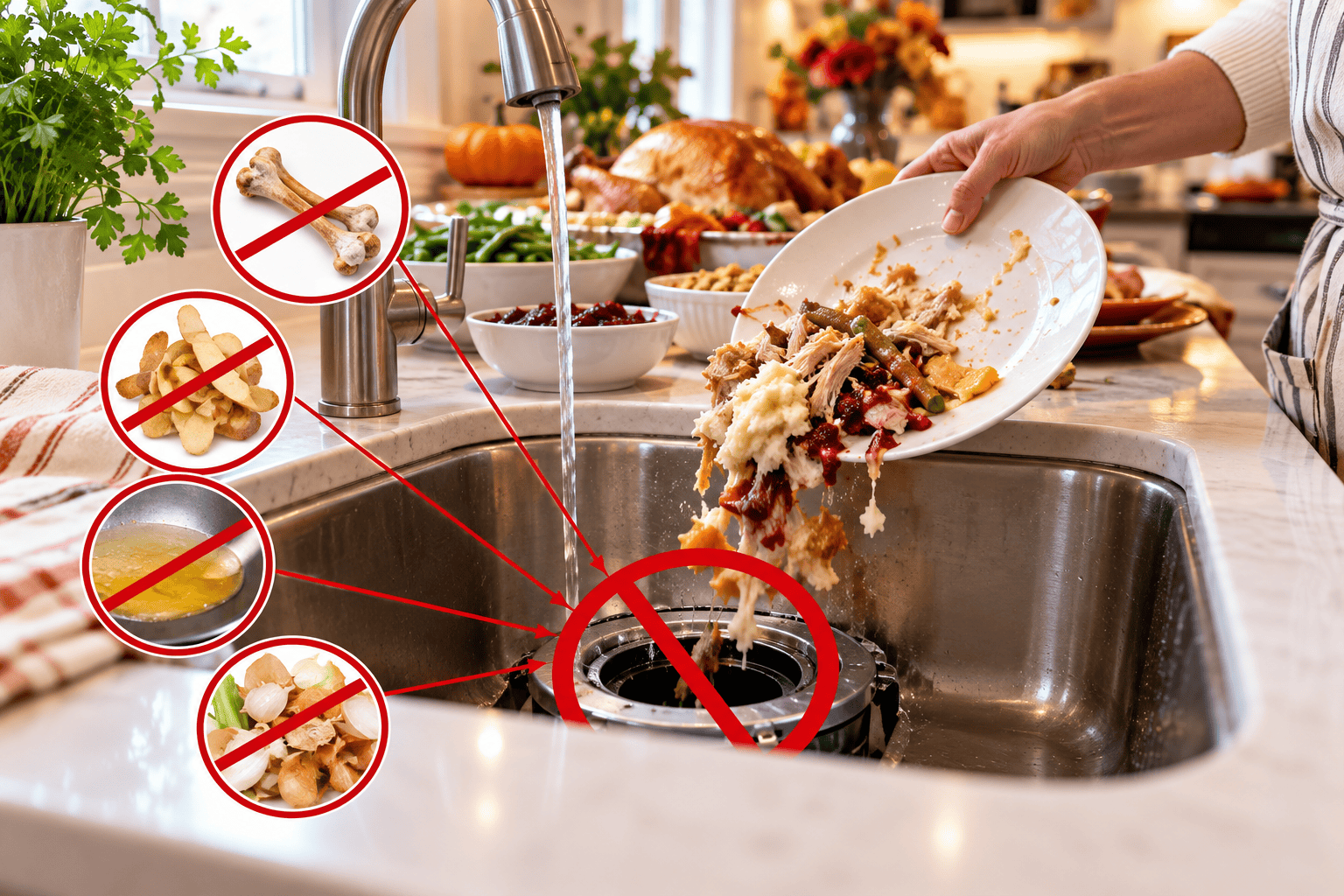
Garbage disposal problems before Thanksgiving can turn holiday cooking into a messy kitchen emergency. Turkey bones, potato peels, grease, and fibrous vegetable scraps may clog a drain or jam the disposal just when the sink and dishwasher are working hardest. The good news is that most preventable holiday disposal problems start with what goes down the drain.
This guide explains what not to put in a garbage disposal, how to recognize a jam or clogged kitchen sink, safe homeowner checks, and when Houston homeowners should get professional help. For related seasonal advice, see dishwasher troubleshooting before Thanksgiving.
Why Garbage Disposal Problems Before Thanksgiving Are So Common
Thanksgiving puts more strain on a kitchen sink than a typical weeknight meal. Potato peels, vegetable scraps, gravy, cooking grease, turkey trimmings, and large quantities of dishes can arrive at the sink in a short period. A garbage disposal is designed to grind small amounts of suitable food waste, not to replace the trash can. Overloading the unit or washing fats down the drain can create a jam or clog just as guests are arriving. A little preparation now can prevent an avoidable holiday kitchen disruption. For a broader kitchen checklist, read our Thanksgiving kitchen preparation tips.
What Not to Put Down the Garbage Disposal Before Thanksgiving
The safest approach is to scrape plates into the trash or compost where appropriate before rinsing. Manufacturer instructions vary by model, so follow your disposal’s owner’s manual when it differs from general advice. These holiday food scraps are especially likely to cause trouble:
1. Turkey bones, large bones, and hard shells
Turkey bones and other hard scraps can jam the grinding mechanism, damage components, or lodge in the drain. Put bones in the trash rather than forcing them through the disposal. Small amounts of soft leftover food are a different matter, but a disposal should not be used as a bone grinder unless the manufacturer explicitly rates it for that use.
2. Turkey grease, gravy, oil, and fat
Never pour turkey drippings, bacon grease, melted butter, or cooking oil down the sink. Fat may look liquid while hot but can cool, thicken, and collect on drainpipe walls. Running hot water or adding soap does not guarantee it will travel safely through household plumbing. Let grease cool, collect it in a suitable container, and dispose of it according to local guidance.
3. Potato peels and starchy leftovers
Thanksgiving mashed potatoes often mean a large pile of peels. In quantity, potato peels and other starchy scraps can form a thick paste and contribute to clogs, especially when combined with grease. Scrape peels into a separate waste container and rinse small residues only when appropriate for your plumbing.
4. Celery, corn husks, and stringy vegetables
Fibrous scraps can wrap around moving parts or collect in the drain. Celery strings, asparagus ends, corn husks, and similar tough vegetable fibers are better kept out of the disposal. The same caution applies to large amounts of onion skins.
5. Eggshells, coffee grounds, and flour
Claims that eggshells sharpen disposal blades are misleading: most residential disposals use grinding components rather than conventional knife blades. Shell fragments, coffee grounds, and flour can accumulate in traps or contribute to sludge when combined with grease. Dispose of large quantities in the trash or compost rather than relying on the sink.
6. Pumpkin pulp, seeds, and squash fibers
Pumpkin pie preparation creates stringy pulp and seeds that can collect in a drain or jam a disposal. Scoop the bulk into a trash or compost container before washing bowls and utensils. Even soft food can cause trouble when pushed through in one large batch.
7. Non-food items and cleaning chemicals
Plastic wrap, twist ties, utensils, glass, foil, paper towels, and dishcloths should never enter a garbage disposal. Avoid pouring chemical drain cleaners into a disposal unless both the cleaner and appliance manufacturers expressly permit it. Mixing chemicals or reaching into the unit can create serious hazards.
How to Prevent Garbage Disposal Problems Before Thanksgiving
Preventing garbage disposal problems before Thanksgiving starts with a few simple habits. Test the disposal several days before the holiday, not when the sink is already full of dirty pans. Use the amount and temperature of running water recommended by the manufacturer, and feed only small, suitable scraps gradually rather than forcing food into the opening. Keep a separate container for peels, bones, and fatty leftovers while preparing dinner.
Do not use the disposal to clear a sink full of standing water or force material down with your fingers. If you notice slow draining, unusual noises, leaks, or frequent resets, investigate before the holiday. Our garbage disposal not working troubleshooting guide explains common symptoms and basic checks.
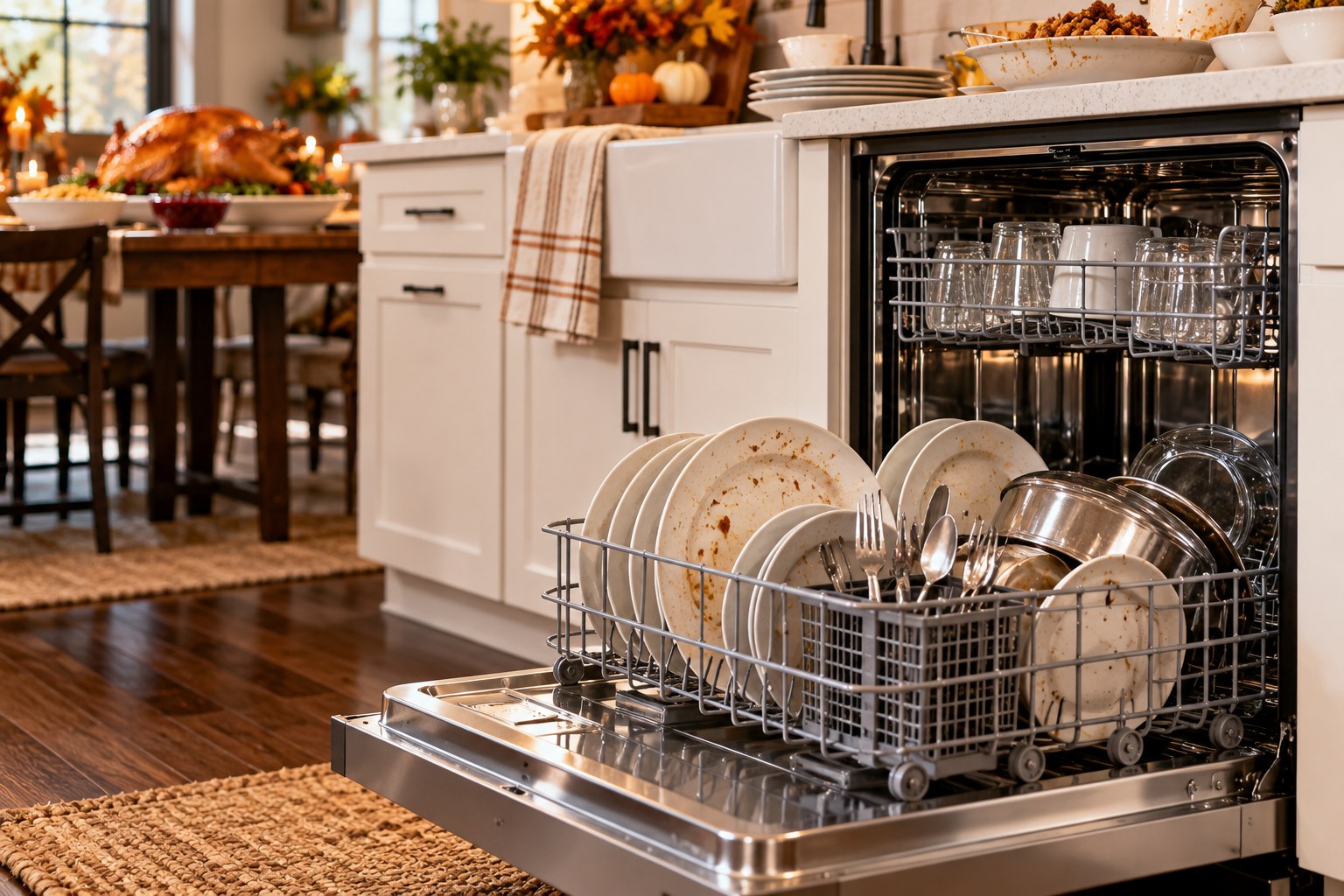
It’s also smart to prepare your dishwasher. Some dishwasher drain lines connect to the disposal assembly, so a blocked connection or sink drain may affect dishwasher drainage. Review dishwasher problems before Thanksgiving and why a dishwasher is not draining if you notice water backing up.
Signs Your Garbage Disposal Is Clogged, Jammed, or Failing
Garbage disposal humming but not spinning
A humming noise without normal grinding may mean the turntable is jammed or the motor is struggling. Switch the disposal off promptly to avoid overheating it. Do not keep flipping the switch or reach inside. See our article on garbage disposal humming or buzzing for related warning signs.
Garbage disposal not draining or sink backing up
Standing water in the sink may indicate a blockage in the trap or drainpipe, not necessarily a failed disposal motor. Stop feeding scraps into the sink and avoid running the dishwasher until the drainage problem is understood. If sewage backs up or multiple fixtures are affected, contact a qualified plumbing professional.
Garbage disposal leaking under the sink
Leaks can develop at the sink mounting connection, dishwasher hose, discharge pipe, or the disposal housing. Turn the unit off and avoid using it until the source is identified. Water near electrical outlets or wiring requires extra caution; keep clear and seek qualified help.
Disposal trips the reset or circuit breaker repeatedly
A reset that trips repeatedly may signal a jam, overload, motor problem, or electrical fault. Do not repeatedly reset the appliance or circuit breaker. Have the unit inspected by an appropriate professional.
Persistent odors and grinding noises
Food trapped in accessible splash-guard areas can cause odors, while metallic grinding or rattling may indicate a foreign object. Turn off power before any manufacturer-approved cleaning. Never put your hand inside the grinding chamber.
Safe Checks If Your Garbage Disposal Stops Working
If the garbage disposal stops working before Thanksgiving, start with safety. Turn the wall switch off. If the unit is plugged into an under-sink outlet, unplug it before any inspection or maintenance, or isolate power at the breaker as directed by the manufacturer. Keep hands out of the opening even when the power is disconnected.
- Look for an obvious obstruction from above using a flashlight, without reaching into the unit.
- Confirm whether the sink drain is blocked or the appliance simply will not run.
- Check the owner’s manual for the model-specific jam-clearing procedure. Some units provide a bottom hex-key port or reset button, but not all do.
- If permitted by the manufacturer, use the designated tool with power disconnected; never force the mechanism.
- After reassembly and restoring power, test only as directed. Stop immediately if the unit hums, leaks, smells hot, or trips again.
Do not attempt internal electrical repairs or remove plumbing fittings when you are unsure of the procedure. For perspective on when to stop, read when to skip DIY appliance repairs and call a professional.
Thanksgiving Kitchen Cleanup: A Better Way to Handle Food Scraps
Set up two collection points before cooking begins: one for ordinary food scraps and one for cooled fats or grease. Ask anyone helping in the kitchen to scrape plates before loading the dishwasher or rinsing pans. Wipe greasy cookware with a paper towel before washing when appropriate, and place the used towel in the trash.
Run the disposal only for the scraps your specific model can handle, in small batches, with water as instructed. Keep the sink strainer clear and do not treat the disposal as a substitute for plumbing maintenance. During a large holiday gathering, assigning one person to manage dishes can reduce accidental disposal of bones, foil, and utensils. Our Thanksgiving appliance emergency prevention tips cover other appliances that need attention before guests arrive.
Can a Garbage Disposal Problem Affect the Dishwasher?
Yes, on some kitchen installations. The dishwasher may discharge through a hose connected to the garbage disposal or an air gap. If the disposal connection or downstream drain is blocked, dirty water can back up or the dishwasher may fail to drain. A newly installed disposal may also require removal of a dishwasher inlet knockout plug, but this is an installation-specific step that should be handled correctly.
Because dishwasher drainage problems have multiple possible causes, avoid assuming the disposal is always responsible. For a broader diagnostic overview, see common dishwasher problems and solutions. If the dishwasher is also leaking, our dishwasher leaking from the bottom or door guide explains other possible causes.
When to Call for Garbage Disposal Repair in Houston
Contact an appropriate appliance-service or plumbing professional when the disposal will not run after safe basic checks, hums repeatedly, leaks from the housing, trips power, or backs up into the sink. A disposal motor problem is different from a clogged drain line, so the correct professional depends on the symptom. Appliance Cowboys publishes helpful kitchen-appliance troubleshooting resources for Houston homeowners; confirm current service availability and whether garbage disposal repair is offered before scheduling.
If several kitchen appliances are showing problems before the holiday, use our guide to avoiding appliance repair on Thanksgiving to prioritize preventive checks. For broader maintenance ideas, see how to extend the lifespan of home appliances.
Thanksgiving Garbage Disposal Checklist
- Test the disposal a few days before Thanksgiving.
- Keep turkey bones, hard shells, and utensils out of the unit.
- Collect cooking grease and oil separately; never pour them down the drain.
- Throw away large amounts of potato peels, pumpkin pulp, and fibrous vegetable scraps.
- Scrape plates before rinsing or loading the dishwasher.
- Follow the owner’s manual for water use and safe cleaning.
- Stop operating a humming, leaking, jammed, or repeatedly tripping disposal.
- Arrange qualified help for electrical issues, persistent leaks, or drain backups.
Frequently Asked Questions About Garbage Disposal Problems Before Thanksgiving
Can you put turkey bones in a garbage disposal?
It is best to keep turkey bones out of most residential garbage disposals. Hard bones can jam the grinding mechanism or cause drain problems. Follow your model’s manual.
Can I pour Thanksgiving gravy or turkey grease down the drain?
No. Grease and fatty gravy can cool and build up in pipes. Collect fats separately and dispose of them according to local guidance.
Why is my garbage disposal humming but not working?
A jam, overload, or motor issue may be responsible. Turn the unit off promptly and follow the manufacturer’s safe troubleshooting instructions rather than repeatedly trying the switch.
Why is my dishwasher backing up into the sink?
A shared drain connection, blocked disposal inlet, air-gap issue, or downstream plumbing clog may be involved. The cause depends on the kitchen’s plumbing configuration.
What should I do if my garbage disposal stops working on Thanksgiving?
Stop using it, keep food scraps out of the sink, and avoid chemical drain cleaners. Use an alternate sink only if it drains safely, and arrange appropriate professional service for persistent problems.
For model-specific guidance, always consult the disposal manufacturer’s instructions. The U.S. EPA’s guidance on reducing wasted food at home also offers ideas for preventing food waste and managing leftovers.