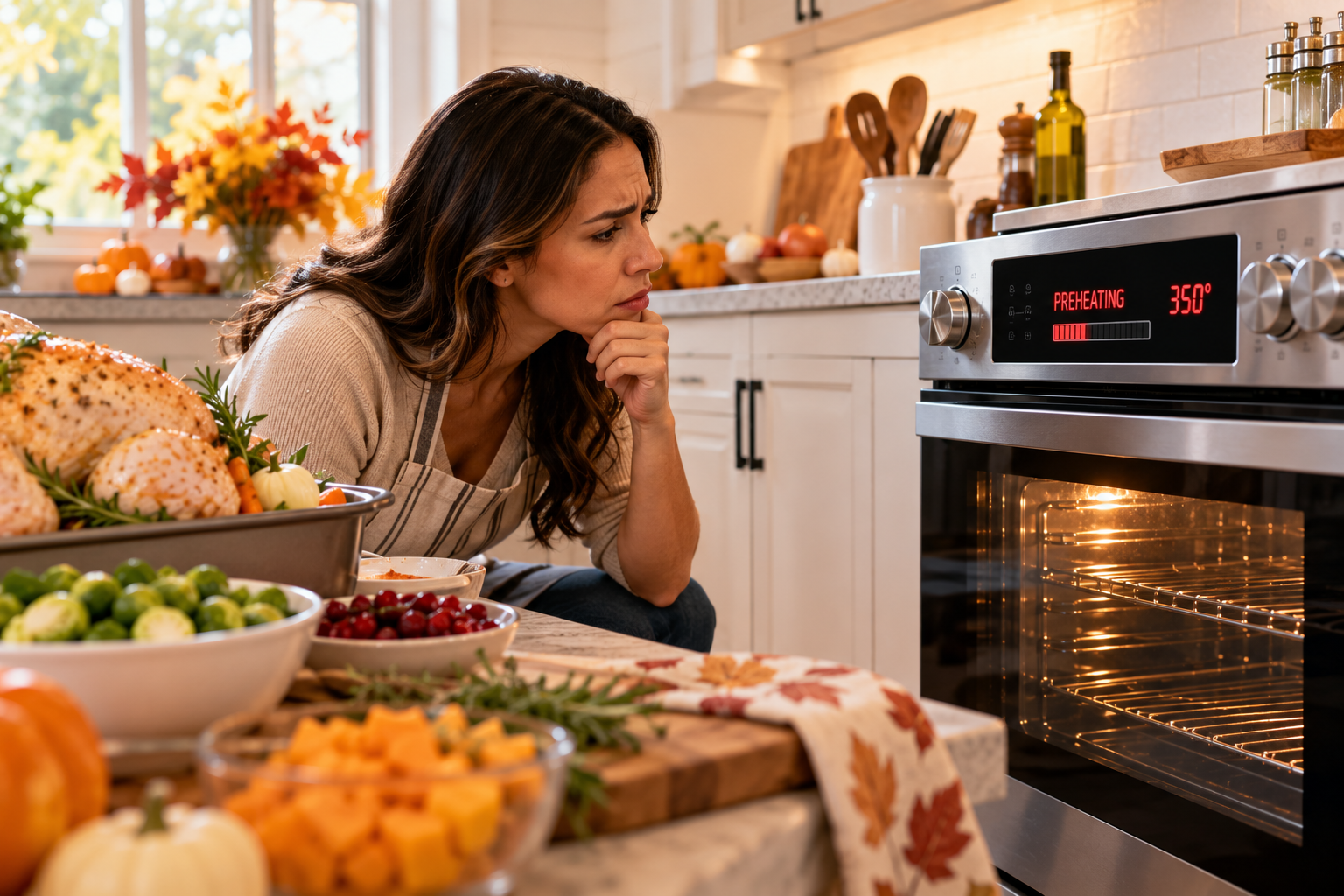
Why Is My Oven Taking So Long to Preheat Before Thanksgiving?
Oven taking too long to preheat before Thanksgiving? do not wait until the turkey is ready to go in. Slow preheating can point to a worn heating element, weak gas igniter, inaccurate temperature sensor, damaged door seal, electrical problem, or another issue that becomes much more noticeable during heavy holiday cooking.
Thanksgiving puts unusual demand on ovens and ranges. Roasting a turkey, baking pies, reheating casseroles, and cooking side dishes can keep the appliance running for hours. Testing it now gives you time to identify a problem before Thanksgiving Day. If you have not done a full holiday check yet, start with our pre-Thanksgiving oven preparation guide.
Oven Taking Too Long to Preheat: What Is Normal?
Preheat time varies by oven type, size, temperature setting, and model. What matters most is whether your oven is suddenly taking much longer than it normally does. If a familiar recipe temperature now takes noticeably longer to reach, or the oven says it is ready while an oven thermometer shows that it is still too cool, there may be a heating or temperature-control problem.
If your oven is taking too long to preheat, do a test several days before Thanksgiving. Set the oven to a temperature you commonly use, let it preheat, and note how long it takes. Watch for delayed ignition, unusual clicking, error codes, burning smells, repeated cycling, or a temperature that never reaches the setting.
7 Reasons Your Oven Is Taking Too Long to Preheat
1. A Weak or Failing Bake Element
When an oven is taking too long to preheat, the bake element is one possible cause. Electric ovens commonly use a bake element to produce much of the heat needed for preheating and cooking. A damaged element may heat weakly, heat only in certain areas, or stop heating completely. Some failures are obvious because the element is cracked or blistered, but others require electrical testing.
If the oven is heating too much rather than too little, the problem is different. Review our guide on what causes an oven to overheat for related temperature-control problems.
2. The Gas Oven Igniter Is Getting Weak
On many gas ovens, a weak igniter can cause an oven taking too long to preheat even if the burner eventually lights. You may notice a longer delay before ignition, repeated attempts to light, or inconsistent heating. Because gas and ignition components involve additional safety concerns, avoid taking apart the system unless you are qualified to do so.
If you smell gas, stop using the appliance and address the safety issue immediately. For broader cooking-appliance warning signs, see the signs your range needs repair.
3. The Temperature Sensor Is Giving the Wrong Reading
If an oven is taking too long to preheat or heating unevenly, the temperature sensor may be involved. The oven temperature sensor helps the control system determine when to turn heat on and off. If the sensor is inaccurate, the oven may preheat slowly, cycle at the wrong times, or cook food unevenly. A sensor can also be affected if it is touching the oven wall instead of sitting in its intended position.
An inexpensive oven thermometer can help you spot a large difference between the selected temperature and the actual cavity temperature. Persistent differences should be diagnosed before you rely on the oven for a long Thanksgiving cooking schedule.
4. Heat Is Escaping Through the Oven Door
An oven taking too long to preheat may be losing heat through the door. A worn, torn, hardened, or displaced door gasket can allow hot air to escape. The oven then has to run longer to reach and maintain the selected temperature. Inspect the seal when the oven is completely cool. Look for gaps, damaged sections, or areas that no longer sit evenly against the door.
Regular cleaning and inspection can prevent some avoidable problems. These oven maintenance tips cover additional steps that can help keep the appliance ready for heavy use.
5. The Oven Door Is Not Closing Correctly
An oven taking too long to preheat may also have a door alignment problem. Even a good gasket cannot seal properly if the door is misaligned or the hinges are worn. A door that does not close evenly can cause heat loss, slow preheating, and inconsistent cooking. Do not force a damaged door closed. Hinge, latch, or alignment problems should be corrected before a long holiday cooking session.
6. The Electrical Supply May Be Incomplete
An oven taking too long to preheat can sometimes have a supply issue. An electric oven may appear to have power while still having an electrical supply problem. Some electric ranges require a full 240-volt supply for the heating elements even though the display or light may operate under different conditions. A partially tripped breaker or wiring problem can therefore create confusing symptoms.
If a breaker trips repeatedly, do not keep resetting it. Repeated breaker trips, sparking, or burning electrical odors are reasons to stop troubleshooting and arrange professional service.
7. Heavy Buildup or Airflow Problems Are Affecting Performance
An oven taking too long to preheat may also have obstructed airflow. Grease, food debris, damaged racks, foil placed where the manufacturer does not allow it, or blocked airflow can interfere with normal heat circulation. Before Thanksgiving, clean loose debris and obvious spills, but be cautious about running an aggressive self-clean cycle immediately before the holiday if the oven has already been showing signs of trouble.
Why Slow Preheating Matters More on Thanksgiving
An oven taking too long to preheat can throw off the entire Thanksgiving schedule. The turkey may go in late, casseroles may compete for limited oven time, and desserts may not bake when planned. More importantly, slow preheating can be an early symptom of a component that is close to failing.
For a broader holiday cooking plan, see our Thanksgiving kitchen preparation checklist and our tips to prevent Thanksgiving appliance emergencies.
That is why testing the oven before the holiday is more useful than discovering the problem after cooking has started. Appliance Cowboys already has a guide for what to do if your oven stops working on Thanksgiving Day, but diagnosing warning signs in advance gives you more options.
Oven Taking Too Long to Preheat? Safe Checks Before Calling for Repair
- Confirm the oven is set to the correct cooking mode and temperature.
- Make sure delay-start, control-lock, Sabbath, or timer settings are not affecting operation.
- Check whether the door closes completely and the gasket appears intact.
- Use an oven thermometer to compare the actual temperature with the selected temperature.
- For electric ovens, check the breaker once if the appliance appears to have lost power.
- Watch whether the bake element glows normally if it is designed to be visible.
- For gas ovens, listen for unusually delayed ignition, but stop immediately if you smell gas.
When to Stop DIY Troubleshooting
When an oven is taking too long to preheat, basic observation is useful, but internal oven repairs can involve high voltage, high temperatures, sharp panels, and gas components. Stop using the oven if you notice strong gas odors, visible sparking, smoke from an electrical source, repeated breaker trips, severe overheating, or a component that appears burned.
If you are deciding whether a repair is beyond a safe homeowner check, read when to skip DIY and call a professional.
Houston Oven Repair When Your Oven Is Taking Too Long to Preheat
If your oven is taking too long to preheat, will not reach temperature, heats unevenly, or shuts off unexpectedly, getting it diagnosed before Thanksgiving can help prevent a holiday cooking emergency. Appliance Cowboys services ovens, ranges, and other major home appliances in the Houston area.
Schedule oven repair in Houston when slow preheating or temperature problems continue after basic checks. If your cooktop or range is also having issues, our range repair service covers related cooking-appliance problems.
Oven Taking Too Long to Preheat: Frequently Asked Questions
Why is my oven taking too long to preheat to 350°F?
Preheat time depends on the model, starting temperature, and cooking mode. If the same oven suddenly takes much longer than usual, possible causes include a failing heating element, weak gas igniter, sensor problem, or heat escaping through the door.
How do I know whether my oven temperature is accurate?
Use an oven-safe thermometer as directed and compare readings after the temperature stabilizes. Individual readings may fluctuate as the oven cycles, so avoid diagnosing a fault from one momentary reading.
Can a bad oven igniter cause slow preheating?
Yes. In many gas ovens, a weak igniter can delay burner ignition and increase preheat time. Gas ignition repairs should be handled by qualified technicians.
Should I use the oven’s self-clean cycle before Thanksgiving?
If your oven is already behaving abnormally, avoid running a high-heat self-clean cycle immediately before the holiday. Follow your manufacturer’s instructions and arrange an inspection when needed.
When should I call for oven repair in Houston?
If the oven repeatedly fails to reach temperature, has delayed ignition, trips breakers, or displays error codes, schedule professional diagnosis before heavy holiday cooking.
Get Your Oven Ready Before the Thanksgiving Rush
An oven taking too long to preheat is easy to ignore when you are only cooking a quick weeknight meal. Before Thanksgiving, it deserves attention. Test the oven early, check the door and settings, compare the actual temperature, and watch for ignition or heating issues. Fixing a developing problem now can make Thanksgiving cooking much easier than dealing with an oven failure while dinner is already underway.