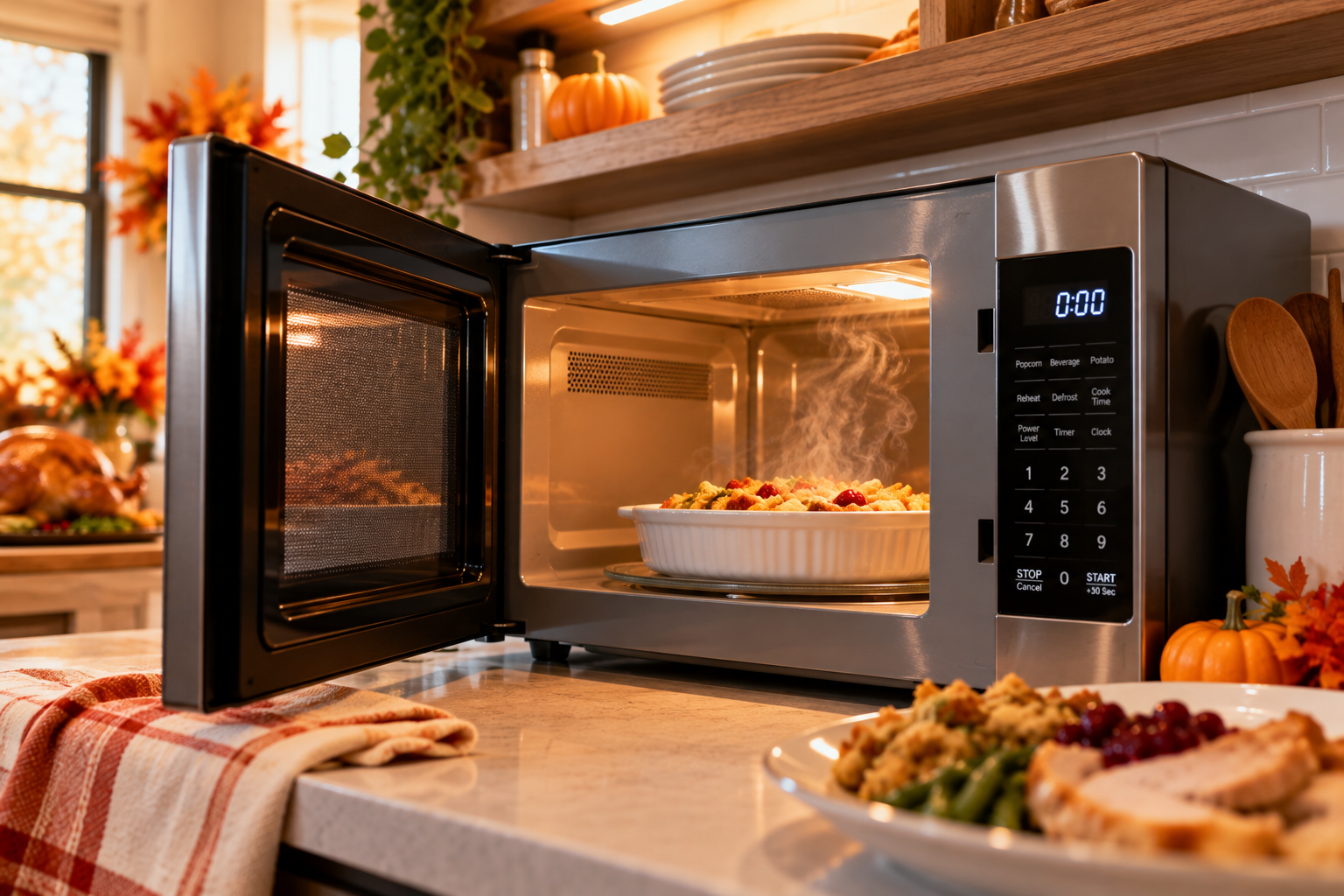
Microwave not heating before Thanksgiving? A microwave that runs but leaves food cold, stops mid-cycle, or sparks can disrupt holiday cooking and make reheating leftovers unsafe. This Houston-focused guide explains common warning signs, safe checks, and when to seek professional appliance repair.
Before your guests arrive, test the microwave under normal conditions and never attempt internal high-voltage repairs.
Why a Microwave That Is Not Heating Matters Before Thanksgiving
When the oven is full of turkey, casseroles, and rolls, the microwave becomes a convenient way to warm gravy, melt butter, and reheat small portions. A microwave not heating before Thanksgiving can slow meal preparation and complicate the safe reheating of leftovers. Testing it a few days early is better than discovering the problem while guests are waiting. For the bigger picture, see our Thanksgiving kitchen preparation guide.
1. Microwave Runs but Does Not Heat Food
One of the most searched symptoms is a microwave running but not heating. The display may count down, the fan may operate, and the turntable may rotate while the food stays cold. Possible causes include a door-interlock issue, control problem, or failure in the high-voltage heating system. A microwave’s high-voltage capacitor can retain a dangerous charge even after it is unplugged. Never remove the cabinet or attempt to test internal high-voltage components yourself. A qualified technician should diagnose these failures.
2. Microwave Heating Food Unevenly
If part of a meal is hot while the center remains cold, first consider food size, shape, density, and placement. Cover food appropriately, stir or rotate when recommended, and follow the manufacturer’s standing-time instructions. Do not assume that a steaming edge means the center has reached a safe temperature. For leftovers, the USDA recommends reheating to 165°F (74°C), checked with a food thermometer in several places. See the USDA leftovers and food safety guidance. If a familiar portion heats much less effectively than before, the appliance may need inspection.
3. Microwave Turns On but Stops Mid-Cycle
Unexpected shutdowns may occur when a microwave overheats, has restricted ventilation, experiences an electrical problem, or detects an internal fault. Check that exterior vents are unobstructed and the unit is installed with the clearances specified by the manufacturer. Let an overheated appliance cool before following the manual’s troubleshooting guidance. If it repeatedly shuts off, emits an electrical smell, or trips the breaker, stop using it and seek qualified service. Do not repeatedly reset a tripped breaker.
4. Door Will Not Close or Latch Properly
A microwave depends on a correctly functioning door and interlock system. A damaged latch, bent hinge, loose door, or compromised seal is a reason to stop using the appliance. Do not hold the door shut, tape it closed, defeat the interlock, or attempt to realign safety components without professional expertise. If the microwave only operates when the door is pushed or lifted, discontinue use and arrange inspection.
5. Sparks, Arcing, or Burning Smells
Sparks inside the cavity can result from unsuitable metal, damaged cookware, food debris, or damage to the microwave itself. Stop the cycle immediately if arcing occurs. Follow the manufacturer’s guidance for safe cleanup only after the appliance has cooled. Never keep running a microwave that repeatedly sparks, smokes, or smells like burning insulation. If a fire starts inside, keep the door closed, turn the microwave off if safe, and follow emergency guidance. Our appliance repair safety tips offer additional context.
6. Unusual Buzzing, Humming, or Grinding
A microwave normally makes some fan and operating noise, but a new loud buzz, grinding sound, or vibration can indicate a turntable problem, fan obstruction, or internal component failure. Remove and reseat the turntable and roller ring only when the appliance is off and cool, following the user manual. If the sound persists or the microwave also fails to heat, stop testing and contact a qualified professional. Never open the cabinet to investigate the source.
7. Turntable Not Spinning
If the turntable does not rotate, food may heat unevenly. Check whether your model has a turntable-off setting and whether the glass tray and roller ring are correctly positioned. Clean accessible crumbs and spills according to the manual. Do not force the mechanism or run the unit with improperly installed parts. A broken drive motor or coupler may require repair. Some models are designed to operate without rotation under specified conditions, so consult the model instructions.
8. Touchpad, Display, or Buttons Not Responding
Unresponsive controls can reflect a control-lock setting, power issue, moisture, or electronic failure. Check for a child lock and review the manual’s normal reset procedure. If buttons activate unpredictably, the display flickers, or the unit starts or stops unexpectedly, discontinue use. Controls and door switches are not appropriate DIY projects because microwave safety systems must work correctly after repair.
Safe Microwave Checks Before Thanksgiving
- Test the microwave with a microwave-safe cup of water, following the manufacturer’s instructions and staying nearby. Do not operate it empty.
- Confirm the outlet supplies power and the control lock is not enabled.
- Check that the door closes normally without forcing it.
- Inspect the accessible cavity for food residue or visible damage.
- Confirm the turntable and roller ring are correctly seated.
- Keep the exterior ventilation openings unobstructed.
- Note error codes, new noises, unusual odors, and repeated shutdowns.
- Stop using the unit if it sparks, trips breakers, has a damaged door, or fails to heat consistently.
Never remove the outer cover, bypass door switches, or probe high-voltage parts. For advice on recognizing when a repair exceeds safe DIY checks, read when to skip DIY and call a professional.
How to Reheat Thanksgiving Leftovers Safely
Reheating is a food-safety task, not just a convenience. Refrigerate perishable leftovers promptly, generally within two hours of serving. Divide large quantities into shallow containers so they cool faster. When reheating leftovers, use a food thermometer to verify 165°F (74°C), including after stirring and allowing the recommended standing time. If the microwave is unreliable, use a properly functioning stovetop or oven instead. Our pre-Thanksgiving oven preparation tips can help you check another reheating option. Do not rely on a faulty microwave to make food safe.
Microwave Repair or Replacement: What Should You Consider?
A qualified diagnosis should consider the microwave’s age, installation, parts availability, repair cost, and whether its door and safety systems can be restored correctly. Countertop models may be more economical to replace, while some built-in or over-the-range units may justify professional assessment. Do not assume that a microwave that powers on is safe to use. For a general decision framework, see how to decide whether to repair or replace an appliance. Confirm whether your preferred service provider handles your microwave type and model.
Thanksgiving Kitchen Appliance Backup Plan
If the microwave fails shortly before the holiday, plan around functioning equipment rather than improvising repairs. Stagger reheating times, use the stovetop for sauces and liquids, and reserve oven space for dishes that need it. Avoid overloading outlets with multiple high-wattage appliances or using extension cords for a microwave. Review Thanksgiving appliance emergency prevention tips and steps for preparing your oven for Thanksgiving while planning cooking schedules.
Microwave Troubleshooting FAQs
Why does my microwave turn on but not heat?
A control, door-interlock, or high-voltage heating-system fault may be involved. Because internal microwave components can retain dangerous electrical energy, arrange professional diagnosis rather than opening the unit.
Can I use a microwave with a damaged door?
No. Stop using it until a qualified professional confirms that the door and safety interlocks operate correctly.
Why is my microwave sparking?
Unsuitable cookware, food debris, or appliance damage can cause arcing. Stop the microwave immediately and do not continue using it if the cause is unclear or damage is visible.
Why does my microwave heat food unevenly?
Food size, density, arrangement, and turntable operation can contribute. Stir or rotate when instructed, allow standing time, and check food temperature with a thermometer.
Should I repair a microwave before Thanksgiving?
If it is unreliable, does not heat, or has safety-related symptoms, stop using it and seek qualified evaluation before depending on it for holiday meals.
Microwave Warning Signs: When to Get Professional Help
If your microwave is not heating before Thanksgiving, shuts off repeatedly, sparks, has a damaged door, or makes new abnormal noises, stop using it until the issue is evaluated. Appliance Cowboys publishes Houston-area appliance troubleshooting and safety guidance; confirm microwave service availability before booking. Testing appliances early gives you time to make a safe alternative plan and keep Thanksgiving cooking on schedule. See our appliance maintenance and lifespan tips for broader preventive guidance.