wine cooler not cooling: Check cooling performance, door seals, airflow, and warning signs before hosting guests.
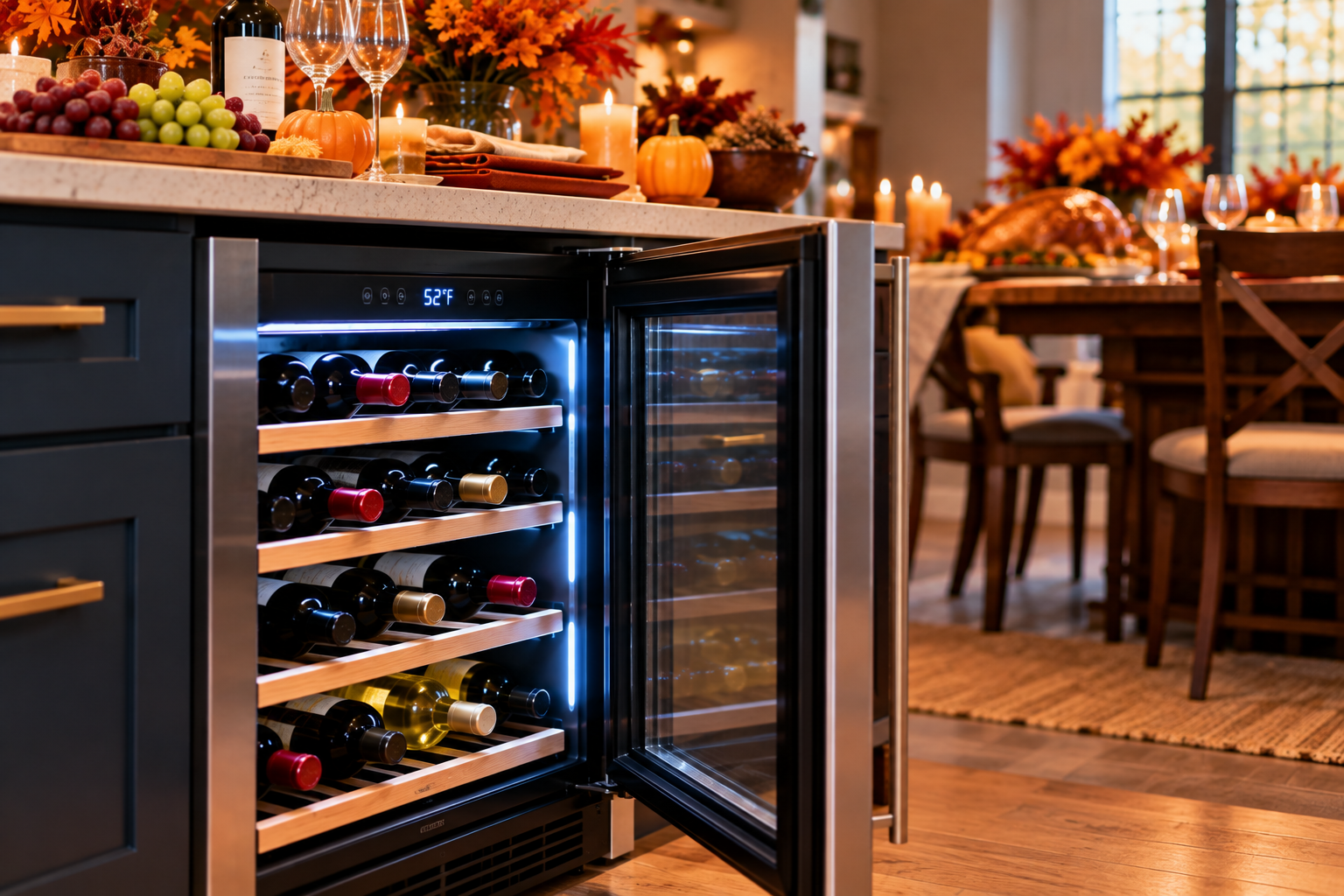
A wine cooler may not do the cooking on Thanksgiving, but it can become an important part of holiday entertaining. When the main refrigerator is packed with turkey, side dishes, desserts, and leftovers, a dedicated wine cooler helps keep beverage storage separate and frees valuable refrigerator space.
If your wine cooler is not cooling properly, Thanksgiving week is not the time to discover it. Temperature changes, excessive noise, condensation, leaking, or a door that does not seal can indicate maintenance or repair needs. Appliance Cowboys’ guide to signs your wine cooler needs repair provides useful background, and the holiday checks below can help you identify problems early.
Why Wine Cooler Performance Matters Before Thanksgiving
Wine coolers are designed for a narrower purpose than a standard refrigerator. Their temperature ranges, humidity behavior, shelving, airflow, and controls vary by model.
Holiday use can change normal conditions. The door may open more often. More bottles may be loaded at once. The surrounding kitchen may be warmer because the oven and range are running for hours.
A healthy unit should recover from ordinary use. A cooler that was already struggling may become noticeably warmer or run continuously.
1. Verify the Actual Temperature
Do not rely only on how a bottle feels. Check the display and, if necessary, use a suitable independent thermometer to compare the actual cabinet temperature with the selected setting.
Give the cooler enough time to stabilize before judging performance. Loading many room-temperature bottles at once can temporarily raise the internal temperature.
If the temperature remains well above the setting after an appropriate recovery period, investigate further. Different wines and cooler designs use different storage targets, so follow the appliance manufacturer and your preferred wine-storage guidance rather than applying one universal setting.
2. Make Sure the Door Is Closing Completely
A bottle, shelf, label, or other item can prevent the door from closing.
Inspect the gasket for food residue, dirt, cracks, loose sections, or areas that no longer contact the cabinet. Clean it gently with mild soap and water when appropriate.
A weak seal allows warm, humid air to enter. The cooling system then runs longer, condensation may increase, and temperature stability can suffer. Do not overload shelves so bottles press against the door.
3. Check Airflow Inside the Cooler
Cold air needs room to circulate. Packing bottles tightly against vents can create uneven temperatures.
Use the shelving arrangement intended for the appliance. Do not add containers or holiday items that block interior fans or vents.
If the cooler has separate zones, make sure bottles are not interfering with airflow between compartments. A cooler that works normally when lightly loaded but struggles when full may have an airflow issue, a weak cooling system, or simply be loaded beyond its design.
4. Clean Accessible Ventilation Areas
Many wine coolers need airflow around exterior vents, condenser areas, or toe-kick grilles.
Dust and debris can reduce heat dissipation. Follow the manufacturer’s instructions for cleaning accessible areas, and disconnect power when required.
Do not remove sealed panels or reach into electrical or mechanical areas beyond normal owner maintenance. Keeping ventilation areas clear is part of the broader appliance-care practices discussed in Appliance Cowboys’ guide to extending the lifespan of home appliances.
5. Listen for Unusual Noise
Compressors and fans make normal operating sounds. A new grinding, squealing, rattling, repeated clicking, or unusually loud vibration is different.
A loose bottle or shelf can create a simple rattle. Make sure items are seated correctly before assuming the appliance itself is failing.
If noise continues when the cabinet is properly loaded, note when it occurs. Does it start with the compressor? Does it change when the door opens? Does cooling performance drop at the same time?
Those details can help a technician diagnose a fan, compressor-related, mounting, or control problem.
6. Watch for Excessive Condensation
Some moisture can occur when humid room air enters a cold cabinet, especially with frequent door openings.
Persistent water droplets, wet shelves, heavy condensation, or moisture outside the cabinet may indicate a door-seal problem, drainage issue, temperature problem, or installation condition.
Dry visible moisture and check that the door closes correctly. Avoid leaving the door open while deciding which bottle to choose. If condensation repeatedly returns during normal use, the underlying cause deserves attention.
7. Check for Water Leaks
Water beneath a wine cooler should not be ignored.
Depending on the design, moisture can come from condensation, a drain system, ice buildup, or another internal issue.
Confirm that the appliance is level according to manufacturer requirements and that the door seals correctly. Do not assume a leak will disappear once Thanksgiving is over.
Water near electrical components or flooring can create additional damage. Arrange diagnosis if the source is not obvious and user-serviceable.
8. The Cooler Runs Constantly
A wine cooler may run longer after loading warm bottles or when the room is warm. Continuous operation combined with poor cooling is more concerning.
Dirty ventilation areas, a weak door seal, blocked airflow, sensor problems, fan trouble, or cooling-system issues can all increase run time.
Compare the behavior with what was normal for the appliance. If it runs almost continuously but still cannot reach the set temperature, service may be needed.
Some cooling symptoms resemble refrigerator problems. Appliance Cowboys’ guide to common Sub-Zero refrigerator failures shows how airflow, seals, fans, and temperature-control issues can affect premium cooling appliances.
9. The Display or Controls Are Acting Strangely
A blank display, flashing code, unresponsive button, or temperature setting that changes unexpectedly can point to a control or power problem.
Check the owner’s manual for the meaning of any displayed code. Do not repeatedly unplug and reconnect the appliance unless the manufacturer recommends that reset procedure.
If controls remain unreliable, record the code or symptom before scheduling repair.
10. Interior Lighting Is Not Working
Lighting does not always affect cooling, but it can be an early sign of a bulb, LED module, switch, door sensor, wiring, or control problem.
Use only the replacement lighting specified for the appliance.
If the light remains on when the door is closed because of a switch or sensor issue, it may add heat inside the cabinet on some designs. Have persistent lighting or door-sensor problems evaluated when basic checks do not solve them.
A Pre-Thanksgiving Wine Cooler Test
Begin several days before the holiday.
Confirm the set temperature. Check actual temperature after the unit has stabilized. Listen for abnormal noise. Inspect the gasket and make sure the door closes easily.
Look for condensation or leaks. Check that vents are unobstructed and that bottles do not block interior airflow.
Then monitor the cooler through a normal day. A stable appliance should maintain its intended conditions without dramatic temperature swings.
Do Not Overload the Cooler Right Before Guests Arrive
Adding many room-temperature bottles at once creates a large cooling load.
Load beverages early enough for the cabinet to recover. Leave appropriate space for airflow and follow the manufacturer’s capacity and shelving guidance.
If you need additional beverage capacity, use other suitable refrigeration rather than forcing bottles into every available gap.
Do not use a wine cooler as general food storage unless the appliance manufacturer says the temperature range is suitable for that purpose.
Wine Cooler vs. Main Refrigerator Problems
If the wine cooler and refrigerator are both struggling, consider whether the kitchen environment, power supply, or heavy holiday use is contributing.
If only the wine cooler is warm while other appliances operate normally, focus diagnosis on that unit.
Do not move temperature-sensitive food into a wine cooler without confirming that it maintains the safe temperature required for that food.
Thanksgiving entertaining is easier when each appliance is used for the purpose it was designed to serve.
Brand-Specific Wine Cooler Issues
Premium wine refrigeration systems may use specialized controls, fans, sensors, compressors, and multi-zone designs.
Appliance Cowboys’ information about Viking refrigerator problems illustrates why brand and model details matter when diagnosing a cooling problem.
Record the model number and any error codes before requesting service. That information can help identify the correct documentation and likely parts.
When to Stop DIY Troubleshooting
Homeowner checks should stay limited to settings, loading, accessible cleaning, gasket inspection, and other manufacturer-approved maintenance.
Stop when diagnosis requires opening electrical panels, working with refrigerant systems, bypassing controls, or testing live circuits.
Burning odors, repeated breaker trips, damaged wiring, or water near electrical components require immediate attention.
Appliance Cowboys’ guide on when to skip DIY and call a professional can help determine when the problem has moved beyond basic maintenance.
Should You Repair the Wine Cooler Before Thanksgiving?
If the temperature is unstable, the unit cannot reach its setting, water is leaking, or mechanical noise is getting worse, repair before Thanksgiving can protect the beverages you plan to serve and prevent a holiday inconvenience.
Do not wait until the cooler is completely warm. Cooling problems often provide warning signs before total failure.
Schedule service early enough for diagnosis and possible parts ordering.
Thanksgiving Wine Cooler Checklist
✓ Verify the set and actual temperature.
✓ Inspect the door gasket.
✓ Make sure bottles do not block vents.
✓ Clean accessible ventilation areas.
✓ Listen for new mechanical noises.
✓ Watch for condensation.
Check for water beneath the unit.
✓ Confirm controls respond normally.
✓ Load room-temperature bottles early.
✓ Avoid overpacking the cabinet.
✓ Arrange repair if temperature remains unstable.
Wine Cooler Repair in Houston Before Thanksgiving
A wine cooler not cooling before Thanksgiving can create unnecessary stress when the main refrigerator is already crowded.
Appliance Cowboys services wine coolers and other refrigeration appliances in the Houston area. If basic checks do not restore stable cooling, professional diagnosis can identify whether airflow, controls, fans, seals, sensors, or other components are involved.
Include the wine cooler in your Thanksgiving appliance preparation instead of treating it as an afterthought. Appliance Cowboys’ Thanksgiving appliance tips can help you coordinate the rest of the kitchen as well.