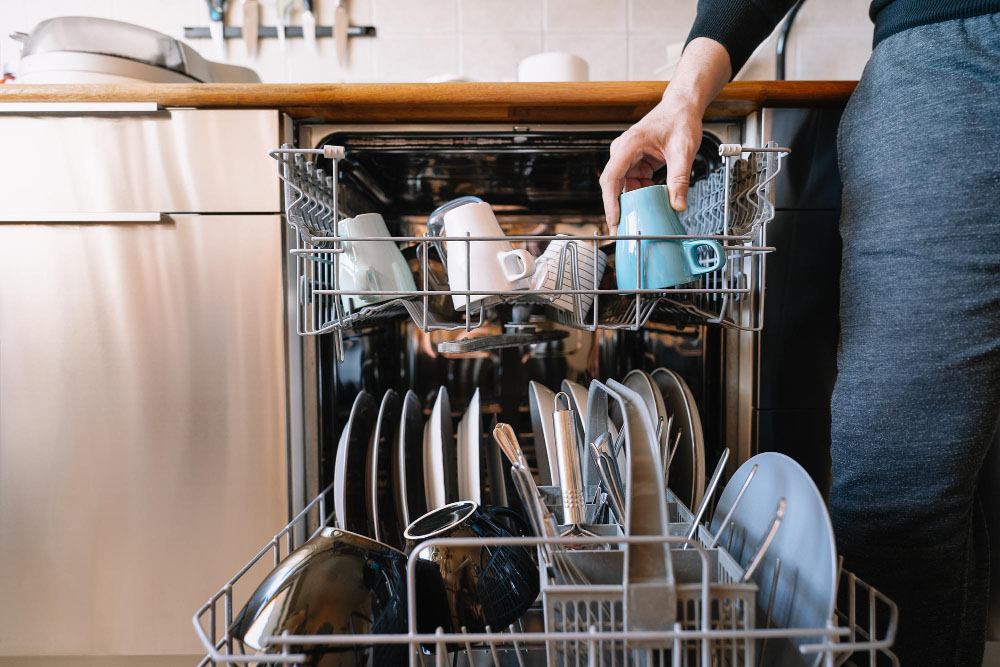
A dishwasher that cleans dishes but leaves them wet can be frustrating, especially when you expect to unload dry plates, glasses, and silverware at the end of a cycle. In many cases, poor drying is caused by a setting, loading issue, rinse-aid problem, or normal condensation. In others, it can point to a failed heating element, vent, fan, thermostat, or control component.
This guide explains the most common reasons a dishwasher is not drying dishes, what you can safely check at home, and when professional dishwasher repair may be the better next step.
Why Is My Dishwasher Not Drying Dishes?
Dishwashers dry dishes in different ways depending on the brand and model. Some use an exposed heating element at the bottom of the tub. Others rely on condensation drying, heated final-rinse water, vents, fans, or combinations of these systems.
If dishes suddenly begin coming out much wetter than usual, the problem is often tied to one of these areas:
- Rinse aid is empty or not dispensing correctly
- Heated-dry or sanitize options are turned off
- Plastic items are retaining moisture
- Dishes are loaded too closely together
- The heating element is damaged
- The vent or drying fan is not operating
- Water is not reaching the proper final-rinse temperature
- A thermostat, sensor, wiring connection, or control component has failed
Start With the Dishwasher Settings
Before assuming the dishwasher needs repair, confirm that the drying option you expect is actually enabled. Many modern dishwashers include energy-saving cycles that reduce or eliminate active heat during drying.
Look for settings such as Heated Dry, Extra Dry, High Temp, Sanitize, or Extended Dry. The exact names vary by manufacturer. Eco or energy-saving cycles can also leave more moisture behind because they use less heat.
If the dishwasher recently started leaving dishes wetter after someone changed the cycle or options, restoring the normal drying setting may solve the problem.
Check the Rinse Aid Dispenser
Rinse aid helps water sheet off dishes instead of forming droplets that remain on surfaces. It is especially important in dishwashers that use condensation drying.
If the rinse-aid reservoir is empty, dishes may come out noticeably wetter even though the dishwasher is otherwise working correctly. Refill the dispenser with a product approved for your dishwasher and make sure the dispenser cap closes securely.
If the reservoir is full but rinse aid does not appear to be dispensing, the dispenser mechanism may need inspection.
Why Plastic Dishes Stay Wet
Plastic does not retain heat the way glass, ceramic, and metal do. Because the surface cools faster, water evaporates less effectively.
It is normal for plastic storage containers, lids, and lightweight cups to remain wetter than plates or glassware. If only plastic items are wet while the rest of the load is reasonably dry, the dishwasher may not have a mechanical problem.
Loading Can Affect Drying Performance
Overloading the dishwasher can prevent hot air and water from circulating properly. Bowls or cups placed too close together can also trap water between surfaces.
For better drying:
- Angle cups and bowls so water can drain
- Avoid nesting dishes together
- Keep spray arms unobstructed
- Leave space around tall items
- Do not allow lightweight plastic pieces to flip over and collect water
Standing water trapped in concave surfaces is usually a loading issue rather than a drying-system failure.
Heating Element Problems
On dishwashers that use an electric heating element, a failed element can cause poor drying and may also affect wash-water temperature.
A visibly cracked, blistered, or burned heating element should be inspected by a professional. An element can also fail electrically without obvious visible damage, which usually requires testing with appropriate diagnostic equipment.
Avoid touching or testing internal electrical components unless power to the dishwasher is fully disconnected and you are qualified to work on the appliance.
Dishwasher Vent or Fan Failure
Some models use a vent to release moist air while others use a fan to move air through the tub during the drying stage. If the vent is stuck closed or the fan is not operating, moisture can remain inside the dishwasher.
Possible signs include:
- Heavy condensation remaining after the cycle
- Dishes that are consistently wet across multiple cycle types
- Little or no warm air near the vent area
- Unusual noises during the drying portion of the cycle
The vent assembly, wax motor, fan motor, wiring, or control circuit may need diagnosis.
Water Temperature Matters
Dishwashers generally depend on sufficiently hot incoming water to clean and dry effectively. If the household water heater is set too low or the hot-water line takes a long time to warm up, drying performance can suffer.
Before starting the dishwasher, some homeowners run the kitchen faucet until the water becomes hot. This helps ensure that the dishwasher begins with hot water instead of spending part of the cycle filling with cooled water from the supply line.
Do not raise the household water-heater temperature beyond safe manufacturer recommendations simply to improve dishwasher drying.
Could the Thermostat or Sensor Be the Problem?
Dishwashers use thermostats and temperature sensors to regulate heating. If one of these components is giving incorrect readings, the control system may stop heating too early or fail to activate the heating circuit.
Because sensor faults can resemble heating-element or control-board problems, accurate diagnosis is important before replacing parts.
What About the Control Board?
The electronic control board manages cycle timing and sends power to pumps, heaters, valves, vents, fans, and other components. A control failure can interrupt the drying stage even when the individual drying components are functional.
Control boards are generally not the first component that should be replaced. A technician should usually test the heating circuit, sensors, fan, vent, wiring, and related components before concluding that the control board is responsible.
When to Call for Dishwasher Repair
Professional dishwasher repair is worth considering when:
- Dishes remain wet on every cycle despite using rinse aid and the correct settings
- The dishwasher is no longer producing normal heat
- The heating element appears damaged
- A vent or fan does not appear to operate
- The dishwasher displays an error code
- The breaker trips or you smell burning
- Drying performance changed suddenly and basic checks do not help
Electrical odors, visible arcing, repeated breaker trips, or melted wiring are safety issues. Stop using the dishwasher and disconnect power until the appliance can be inspected.
Dishwasher Repair in Houston
If your dishwasher is washing but not drying correctly, Appliance Cowboys can diagnose the drying system and determine whether the problem involves the heating element, thermostat, vent, fan, dispenser, sensor, wiring, or electronic controls.
A professional diagnosis can help avoid replacing parts that are still working and can identify whether the problem is a relatively simple repair or a sign that the dishwasher is nearing replacement age.
If you notice water escaping from the machine, review the causes of a dishwasher leaking from the bottom or door. For ongoing drying problems, schedule dishwasher repair.
Frequently Asked Questions
Why are my dishes still wet after the dishwasher finishes?
Common causes include an empty rinse-aid dispenser, energy-saving settings, poor loading, low water temperature, or a malfunction in the dishwasher’s heating or ventilation system.
Why are only plastic dishes wet?
Plastic cools quickly and does not retain enough heat to evaporate water as effectively as glass, ceramic, or metal. Some moisture on plastic is normal.
Does rinse aid really help dishes dry?
Yes. Rinse aid reduces surface tension so water runs off dishes more easily instead of remaining as droplets.
Can a bad heating element cause wet dishes?
Yes. On dishwashers that use active electric heating, a failed heating element can significantly reduce drying performance.
Should I open the dishwasher door after the cycle?
On many models, opening the door slightly after the cycle allows humid air to escape and can improve drying. Follow the manufacturer’s instructions because some models already include automatic door-opening or fan-assisted drying.
Can a dishwasher still wash normally if the drying system is broken?
Yes. A dishwasher may appear to clean normally while a heating element, fan, vent, thermostat, sensor, or control component prevents proper drying.
Schedule Dishwasher Repair When Drying Problems Continue
If correct settings, rinse aid, loading adjustments, and normal household water temperature do not improve drying, the dishwasher may need component-level diagnosis. Appliance Cowboys provides dishwasher repair in Houston and can help determine the cause before unnecessary parts are replaced.