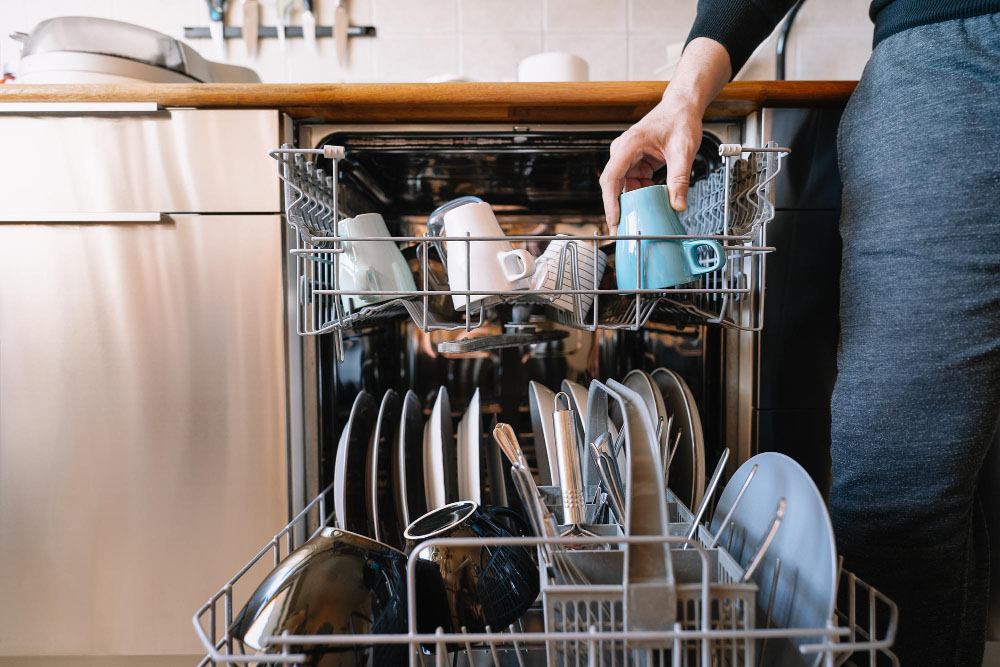
A leaking dishwasher can damage flooring, cabinets, and nearby walls if the source is not found quickly. The location of the water often provides the first clue. A leak from the door area can have different causes than water appearing underneath the center or rear of the appliance.
This guide explains the most common reasons a dishwasher leaks from the bottom or door, the safe checks a homeowner can make, and when professional dishwasher repair is appropriate.
Where Is the Dishwasher Leaking From?
Before inspecting anything, stop the cycle and identify where the water first appears. Do not reach beneath an operating dishwasher where electrical components may be exposed.
Common leak locations include:
- Front left or right corner of the door
- Along the bottom edge of the door
- Under the center of the dishwasher
- Near the water-supply connection
- Near the drain hose
- Around the pump or sump area
Water can travel along the dishwasher frame, so the puddle location does not always identify the exact failed part.
Dishwasher Door Gasket Problems
The door gasket creates a seal between the dishwasher tub and door. Over time, the gasket can become dirty, compressed, torn, brittle, or partially dislodged.
Inspect the gasket for food debris, mineral buildup, cracks, or gaps. Clean it gently with a damp cloth. If the gasket is damaged or no longer sits evenly in its channel, replacement may be necessary.
Some dishwashers also have a lower door seal or splash shield that can allow water to escape near the bottom corners.
A Dishwasher That Is Not Level Can Leak
If the dishwasher tilts forward, water can collect toward the door and escape during washing. An uneven appliance can also prevent the door from sealing correctly.
Check that the dishwasher is stable and does not rock when the door is opened. Leveling adjustments should be made carefully because supply lines, drain hoses, electrical wiring, and mounting brackets may be affected.
Too Much Detergent or the Wrong Detergent
Excess suds can push water through the door seal and create a leak even when no component is broken.
Use only detergent specifically designed for automatic dishwashers. Hand dish soap produces excessive foam and should never be used in the dishwasher.
If the machine recently started leaking after a detergent change, over-sudsing should be considered before more complex repairs.
Check the Spray Arms
A cracked or partially blocked spray arm can direct a concentrated stream of water toward the dishwasher door. This can overwhelm the normal splash protection and cause water to escape.
With the dishwasher off, rotate the spray arms by hand and check for obvious cracks, splitting, or debris in the spray holes. Make sure dishes are not preventing the arms from rotating freely.
Water Inlet Valve or Supply Line Leaks
Water entering the dishwasher passes through the supply line and inlet valve. A loose fitting, damaged hose, cracked valve body, or failed seal can cause water to appear beneath the appliance.
A supply-side leak may occur during the fill portion of the cycle or may drip whenever the household water supply is pressurized.
Because the inlet valve combines plumbing and electrical connections, repair is usually best handled by a qualified technician.
Drain Hose Leaks
The drain hose carries wastewater from the dishwasher to the sink drain or garbage disposal connection. Hose cracks, loose clamps, damaged fittings, or poor routing can produce leaks during the drain portion of the cycle.
If the leak appears only when the dishwasher pumps water out, the drain hose and related connections should be inspected.
Pump, Sump, or Seal Leaks
Water appearing beneath the center of the dishwasher can originate from the circulation pump, drain pump, sump assembly, motor shaft seal, or related gaskets.
These components are located underneath the tub and often require removal of access panels or the dishwasher itself for proper diagnosis.
A pump leak may leave mineral deposits or water tracks around the failed component. Continued operation can damage the motor or electrical parts below.
Float or Overfill Problems
Dishwashers use a float, float switch, pressure sensor, or electronic water-level system to prevent overfilling. If the appliance takes in too much water, the excess may leak through the door or overflow into the base.
Possible causes include:
- A stuck float
- A failed float switch
- A faulty inlet valve
- A pressure-sensing problem
- A control-system fault
If the dishwasher appears to fill higher than normal, stop using it until the cause is identified.
Door Latch and Hinge Problems
A dishwasher door must close squarely and apply even pressure against the gasket. A worn latch, bent hinge, loose mounting hardware, or misaligned door can create a small opening where water escapes.
If the door feels loose, closes unevenly, or requires unusual force to latch, the door hardware should be inspected.
When a Dishwasher Leak Requires Immediate Attention
Stop using the dishwasher and disconnect power if you notice:
- Water near electrical wiring or the junction box
- A repeated breaker trip
- Burning smells or visible arcing
- A major supply-line leak
- Water spreading beneath cabinets or flooring
- Continuous filling that does not stop
Shut off the dishwasher’s water supply if water continues to enter or leak while the machine is off.
How a Technician Diagnoses a Dishwasher Leak
A proper leak diagnosis usually involves observing the dishwasher during fill, wash, drain, and dry stages. The technician may inspect the door seal, spray system, inlet valve, supply line, drain hose, pump assembly, sump, float system, and internal plumbing connections.
The goal is to identify the first point where water escapes rather than replacing parts based only on where the puddle appears.
Dishwasher Repair in Houston
Appliance Cowboys provides dishwasher repair in Houston for leaks from the door, bottom, supply system, drain system, pump, sump, and other internal components.
If your dishwasher is leaking, early diagnosis can reduce the chance of water damage and prevent a relatively small repair from becoming a larger appliance or flooring problem.
If your dishwasher also leaves dishes wet, see our guide to a dishwasher not drying dishes. To prevent further water damage, schedule dishwasher repair.
Frequently Asked Questions
Why is my dishwasher leaking from the bottom of the door?
Common causes include a damaged door gasket, lower door seal, excessive suds, a dishwasher that is tilted forward, or a spray arm directing water toward the door.
Why is water leaking from underneath my dishwasher?
Possible causes include the inlet valve, supply line, drain hose, circulation pump, drain pump, sump, or internal seals.
Can too much detergent make a dishwasher leak?
Yes. Excessive suds can force water and foam through the door seal.
Can a clogged drain cause a dishwasher leak?
A drainage restriction can contribute to high water levels or backup conditions, but the leak source should still be inspected rather than assuming the drain is the only problem.
Is it safe to keep running a leaking dishwasher?
No. Continued use can worsen water damage and may expose electrical components to moisture.
When should I call for dishwasher repair?
Call for service when the leak continues after basic checks, comes from underneath the machine, involves electrical symptoms, or appears connected to a pump, valve, hose, sensor, or control component.
Get a Dishwasher Leak Diagnosed Before Damage Spreads
A dishwasher leak should be treated as both an appliance problem and a potential water-damage issue. Identifying whether the leak is coming from the door, supply system, drain system, or internal pump assembly is the key first step. Appliance Cowboys can diagnose dishwasher leaks in Houston and recommend the appropriate repair based on the actual source.